
You look at your roof from your driveway. It looks fine. A little wear maybe, but nothing obviously broken. You’re thinking: “Do I really need a roof inspection? My roof looks okay. And I don’t have $400 to spend on something that might be nothing.”
Here’s the thing: Your roof looks fine from the ground because you can’t see the problems. Hail damage shows up as small dents you can’t see from 40 feet away. Wind lifts shingles without tearing them off invisible from below. Water gets in through micro-cracks you’d never spot. By the time you see obvious damage, water’s already been inside for weeks or months.
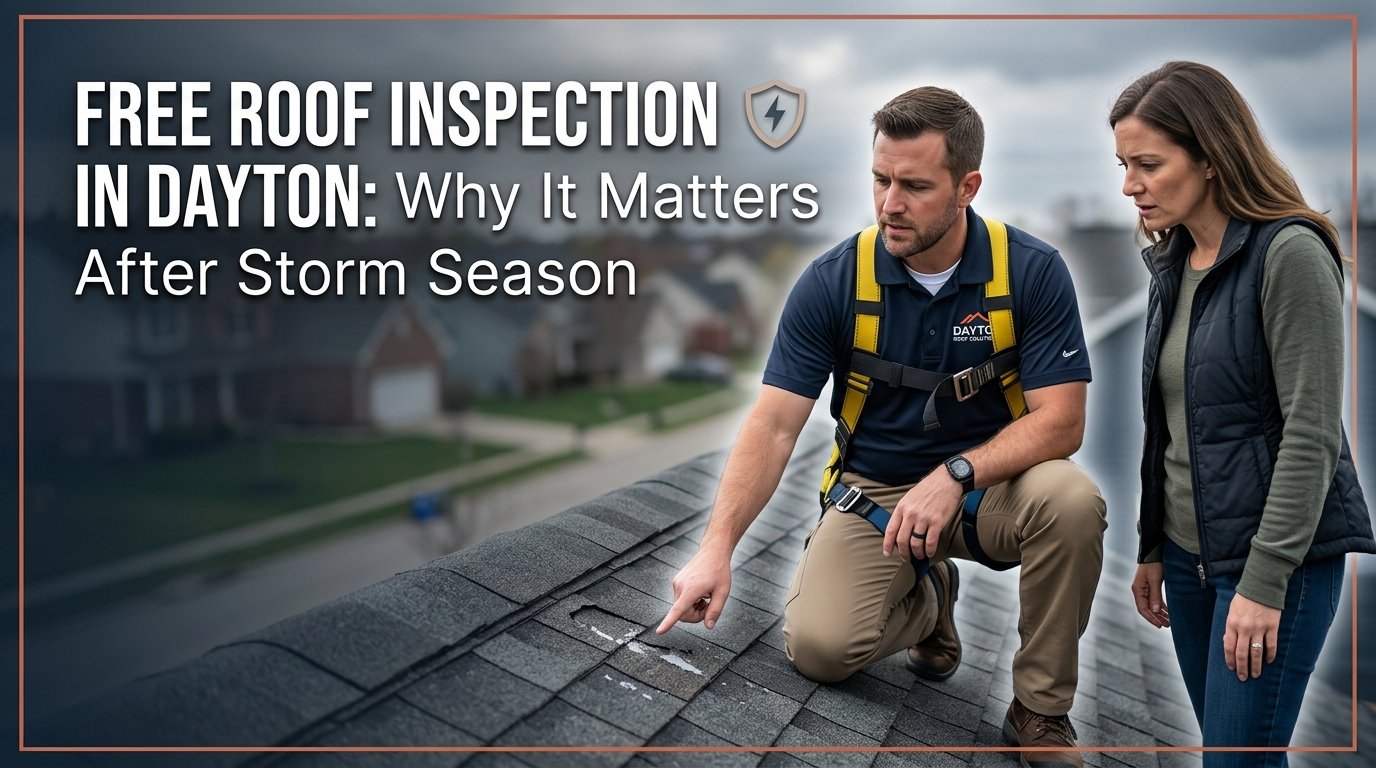
A free roof inspection solves this. It’s an expert looking at your roof from up close, checking the stuff you can’t see, telling you what’s really going on. No obligation. No pressure. Just information that protects your home.
This guide explains why free inspections matter in Dayton specifically, what inspectors actually look for, and why getting one after storm season is smart thinking especially for insurance purposes.
Why Your Roof Looks Fine But Might Not Be
This is the core problem with roofs. They fail invisibly until suddenly they’re failing visibly.
What you see from the ground: The overall shape. The color. Obvious missing shingles or big dents.
What you don’t see: Lifted shingle edges. Micro-cracks from hail. Separated flashing. Granules wearing off (happens gradually, you don’t notice). Soft spots in decking where water’s been getting in for months.
Dayton spring storms are the culprit. Hail. High wind. Rain. These hit roofs hard. Hail dents shingles doesn’t always tear them off. Just dents them. Small dent. But the impact compromises the shingle. Creates cracks you can’t see from below. Water gets in through those cracks.
Wind lifts shingles. You don’t realize it from the ground. Shingle’s still attached at one spot, but it’s lifted. Next rain, water gets under it.
You walk around your house. Everything looks normal. But water’s getting in somewhere. Slowly. Silently. By the time you notice the water stain on your ceiling, damage has been happening for months.
A free inspection catches this before it becomes a problem.
What You Actually Get During a Free Roof Inspection
It’s not just someone standing on your roof looking around. It’s systematic checking.
On the roof itself:
Shingle condition. Are they curled? Cracked? Missing? Are edges lifted?
Hail damage. Small dents that show shingles are compromised.
Flashing condition. Around chimneys, vents, valleys. Is caulk cracking? Is flashing pulling away?
Gutters. Clogged? Pulling away? Full of granules?
Ventilation. Is air flowing properly? Or is moisture getting trapped?
In the attic:
Water stains on wood. Sign water’s getting in.
Mold or mildew smell. Moisture problem.
Insulation condition. Is it wet? Compressed?
Decking. Any soft spots? Signs of rot?
Outside assessment:
Overall structure. Sagging anywhere? Structural issues?
Surrounding trees. Branches hanging over? Debris on roof?
Gutter drainage. Is water draining away from house?
Then they document everything with photos. You get a report showing what they found. If repairs are needed, they give you estimate.
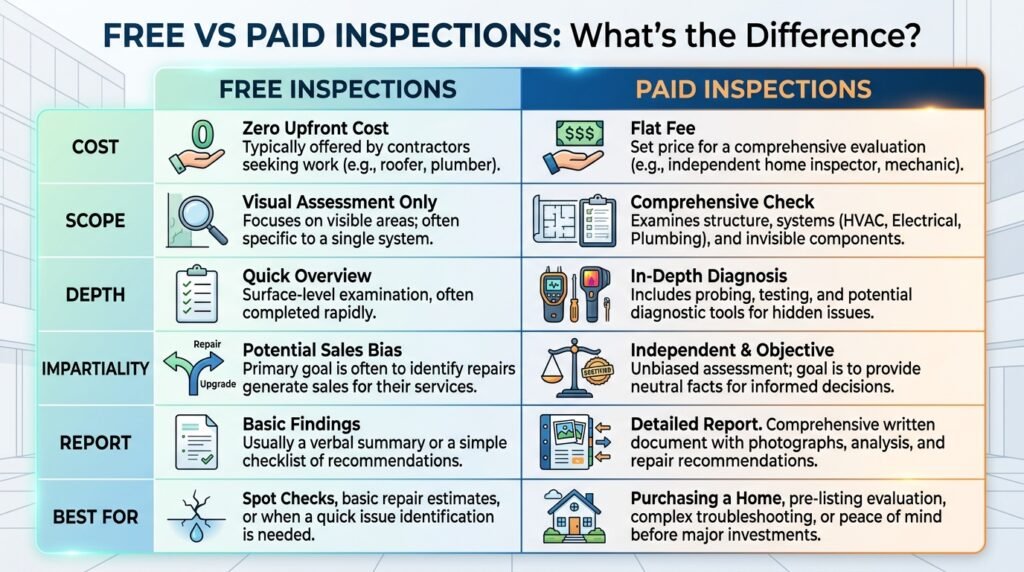
Free vs Paid Inspections: What’s the Difference?
Some roofers charge for inspections. Some offer them free. What’s the difference?
Free inspections: Roofer comes out, checks your roof, tells you what they find, gives you estimate if work’s needed. No obligation to use them.
Why do they offer free? Because most people who get a free inspection and hear about a problem will hire that roofer to fix it. One free inspection leads to a job.
Paid inspections: You pay $200-$400 for detailed inspection with comprehensive report. Useful if you want detailed documentation for insurance or if you’re having roof issues and want third-party assessment.
For most homeowners, free inspection is fine. You get good information. If they find something, you can decide whether to use them or shop around.
Storm Season in Dayton: Why Inspection Timing Matters
Dayton spring and early summer bring storms. Hail specifically. Wind. Heavy rain.
After these storms, inspections make sense. Not because you necessarily see damage. But because damage often happens invisibly.
The timeline: Storm hits. Your roof takes the hit. You look from ground. Everything looks okay.
Three weeks later, water stain appears on ceiling. Or you smell mustiness in attic. Now you’ve got a problem.
If you’d gotten inspection right after storm, they would’ve found the problem. You’d get it fixed before water gets inside.
Getting inspected within a week of major storm is smart. Catches damage early. Prevents water damage.
Insurance and Roof Inspections: This Matters More Than You Think
Here’s something most homeowners don’t realize: Insurance companies want documentation of damage.
If hail hits your roof and you want insurance to cover repairs:
You need proof of damage. Photos. Documentation. Professional assessment.
You need timeline. When did damage occur? You can’t claim damage from six months ago as storm damage from today.
You need estimates. How much will repairs cost?
A free roof inspection provides all this. Inspector documents damage with photos. Gives estimate. Provides report with date and findings.
This documentation supports your insurance claim. Without it, insurance might deny the claim or delay it.
So getting a free inspection right after a storm isn’t just about your roof. It’s about protecting your insurance claim.
Red Flags That Mean You Should Get Inspected Soon
After a storm: Hail came through. Even if you don’t see obvious damage, get inspected within a week.
Wind was strong. Especially if you heard it hit your roof hard.
Heavy rain with wind. This combination causes problems.
General signs: You notice water stain on ceiling. Schedule inspection same day.
You smell mustiness in attic. Water’s getting in somewhere.
You see shingles in yard or gutter. They’re coming off.
Your roof’s over 15 years old. Get annual inspection.
You haven’t had inspection in years. Time to check.
What Homeowners Should Ask During Inspection
When inspector’s there, ask specific questions:
“What’s the lifespan of my current roof?” (Honest answer, not salesy answer)
“Are there any problems that need immediate attention?” (Not problems that would be nice to fix, actual problems)
“If I do nothing, what happens and when?” (Timeline of failure)
“If I do repairs, how long will that buy me?” (Are you delaying inevitable replacement or extending roof life?)
“What’s covered under my warranty?” (Your roof might have warranty still active)
Good inspectors answer these honestly. Not trying to sell you a full replacement if repairs make sense.
Scheduling Your Free Inspection: What to Know
Timing: After storm within a week if possible. Spring before summer storms hit. Fall after summer storms. Annual checkup if roof’s aging.
What to mention when calling: Age of roof if you know it. Recent storms or damage concerns. Any water stains or signs of problems. Purpose (insurance claim, general checkup, etc.)
What to expect: 30 minutes to 1 hour for inspection. Photos and documentation. Verbal report and written estimate if needed. No pressure to decide immediately.
Cost: Free in most cases. Confirm when you call.
The Real Value of Free Inspection
It’s not about finding problems. It’s about peace of mind.
Either: A) Inspector finds nothing. Your roof’s fine. You can relax for another year. B) Inspector finds something small. You fix it before it becomes big. C) Inspector finds something serious. You know what you’re dealing with. You can plan.
All three outcomes are valuable. The cost is zero (it’s free). The benefit is knowing your roof’s condition.
That’s the deal with free inspections.
Frequently Asked Questions
Is a free roof inspection really free?
Yes. Legitimate roofing contractors offer free inspections. No obligation. They make money from repair jobs, not from inspections.
What should I do if inspection finds damage?
Get 2-3 estimates from different contractors. Compare costs and recommendations. Choose contractor with good reviews and warranty. Don’t feel pressured to decide immediately.
Do I need inspection if my roof looks fine?
Annual inspections are smart practice, especially in Dayton’s weather. Problems develop invisibly. Early detection saves money.
Will inspection affect my insurance?
No. Insurance companies like inspections. Documentation helps claims. Getting inspection doesn’t negatively impact your insurance.
How soon after a storm should I get inspected?
Within a week if possible. Early inspection documents damage while it’s fresh. Supports insurance claim.
What if I can’t get on my roof?
Inspectors use ladders and can access most residential roofs safely. You don’t need to get on your roof. They do it.
Can I get inspection if I’m planning to sell?
Yes. Buyer’s appraiser will check roof anyway. Getting free inspection shows you what condition it’s in. You can address issues before listing or price accordingly.
Bottom line: Free roof inspections in Dayton are smart investment of time (not money). They catch invisible problems before they become expensive. Schedule one after any storm. Schedule annual inspections if your roof’s aging. Get documentation for insurance purposes. And most importantly: stop guessing about your roof’s condition. Know what you’re dealing with.