
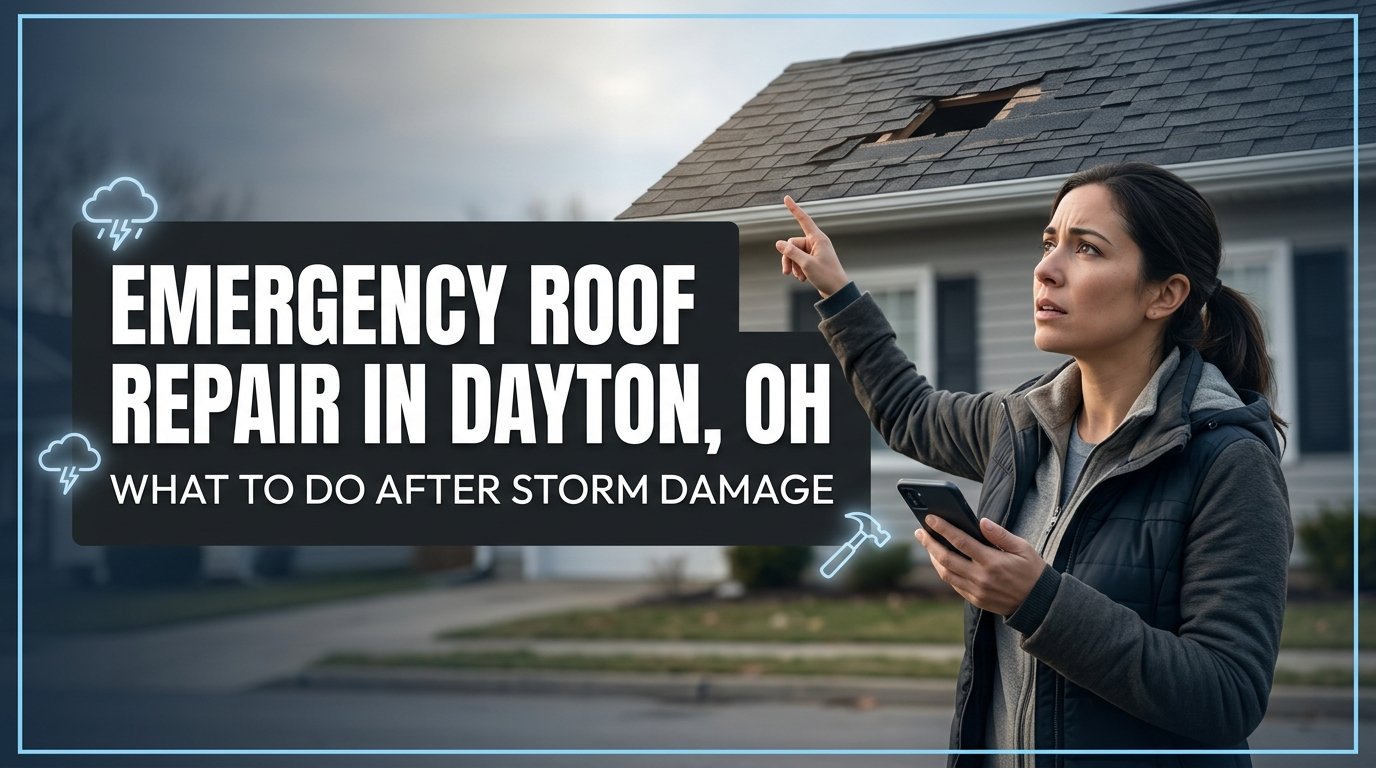
It just happened. A storm rolled through Dayton. You heard something on the roof. Wind. Loud. Then you notice it: water dripping from your ceiling. Or you see shingles missing. Or there’s a tree branch on your roof.
Your first thought is panic. “How bad is this? Is my house okay? How much is this going to cost? What do I do right now?”
Take a breath. You’re going to be fine. This happens in Dayton during storm season. It sucks, but it’s fixable. You just need to know what to do in the next few hours to stop the damage from getting worse.
This guide walks you through exactly what to do right now, how emergency tarping works, when to call for help, and what happens next. Step by step. No panic.
Right Now: The First 15 Minutes After You Notice Damage
Your immediate goal: Stop water from getting further into your house.
Step 1: Check for active leaks inside.
Go to your attic or ceiling spaces. Look up. Is water actively dripping? Or just a wet spot?
Active dripping? You need to catch it. Put buckets under the leak. Move furniture away from wet areas. Open windows if raining has stopped let air flow to dry things out.
Just a wet spot? Still a problem, but not as immediate.
Step 2: Document with photos.
Take pictures of the damage. Roof damage. Water stains inside. Wet insulation. These photos matter for insurance.
Get photos of missing shingles, dents, tree damage anything visible. Do this while it’s light out. Don’t climb on the roof. Photos from the ground are fine.
Step 3: Don’t climb on the roof yourself.
I know you want to look. Don’t. Damaged roofs are slippery. You could fall. Roof’s already compromised. You climbing on it makes things worse. Wait for professionals.
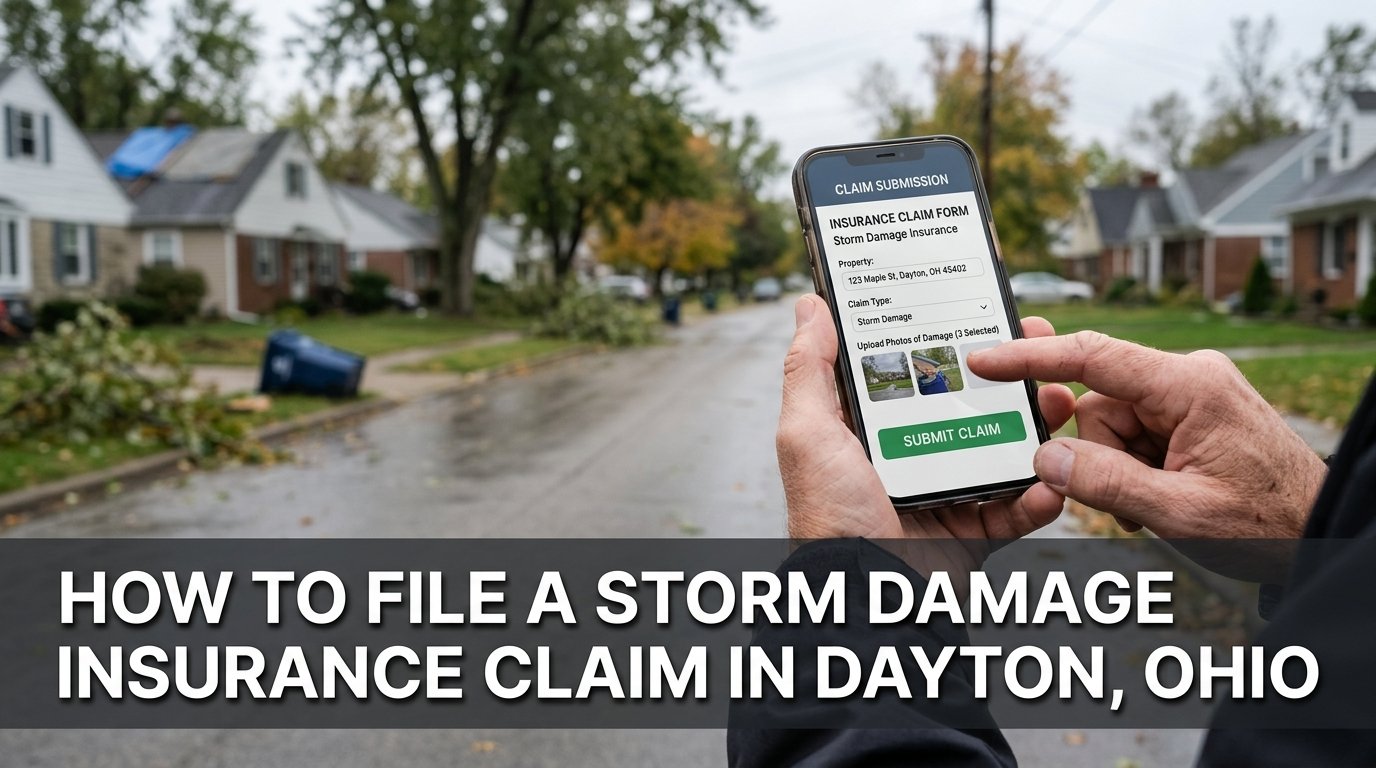
Step 4: Call your insurance company.
Report the damage. Tell them water might be getting in. They’ll likely send an adjuster, or they’ll authorize emergency repairs. Get a claim number if they give you one.
Understanding What Happened to Your Roof
Dayton storms are specific. Spring hail. Summer wind. These damage roofs in different ways.
Hail damage: Dents in shingles. Cracks. Sometimes looks small. Sometimes shingles fail weeks later because the impact weakened them.
Wind damage: Lifts shingles. Tears them off. Tears flashing. Water sneaks in immediately.
Tree damage: Branches on roof. Sometimes just sitting there. Sometimes breaking through. Holes in roof mean water’s coming in.
Water damage: Heavy rain finds weak spots. Cracks in flashing. Lifted shingles. Water gets in.
Dayton weather’s rough because storms come hard and fast. You don’t always see the damage until water’s already inside.
Emergency Roof Tarping: What It Is and Why You Might Need It
If a large section of your roof is exposed (missing shingles, hole, branches tore it up), you need emergency tarping.
What it is: A heavy tarp (waterproof material) gets nailed over the damaged area. Prevents rain from getting into the hole until permanent repairs can be made.
Why it matters: It’s temporary protection. Buys you time until contractor can do real repairs. Without it, every time it rains, more water gets in.
Who should do it: Professional roofers. Not you. Not your friend who “helped with a roof once.” Tarping wrong can cause more damage. Professionals know how to secure it so wind doesn’t rip it off.
How fast: If you call now and it’s not raining, emergency tarping might happen today. If it’s actively raining or dark, probably first thing tomorrow morning.
Cost: Usually $300-$800 depending on size of damage. Temporary fix, so not expensive. But it prevents thousands in water damage.
Roof Leak Repair: What You’re Looking For
Water dripping. That’s the sign. Not a small stain. Active dripping during rain.
Where leaks happen after storms:
Around chimneys. Flashing gets torn.
Around vents. Same thing.
Under lifted shingles. Water runs under, into house.
Cracks in the roof itself. Sometimes visible, sometimes not.
Gutters that got damaged. Water overflows, runs down inside walls.
What happens if you ignore it:
Water soaks insulation. Mold grows. Wood rots. You’re looking at $5,000+ in interior damage quickly.
Water damage spreads. What seems like one ceiling stain becomes multiple. Drywall gets soft. Paint peels. Smell gets worse.
Don’t ignore leaking roofs. This one’s not “wait and see.” This one’s “fix it now.”
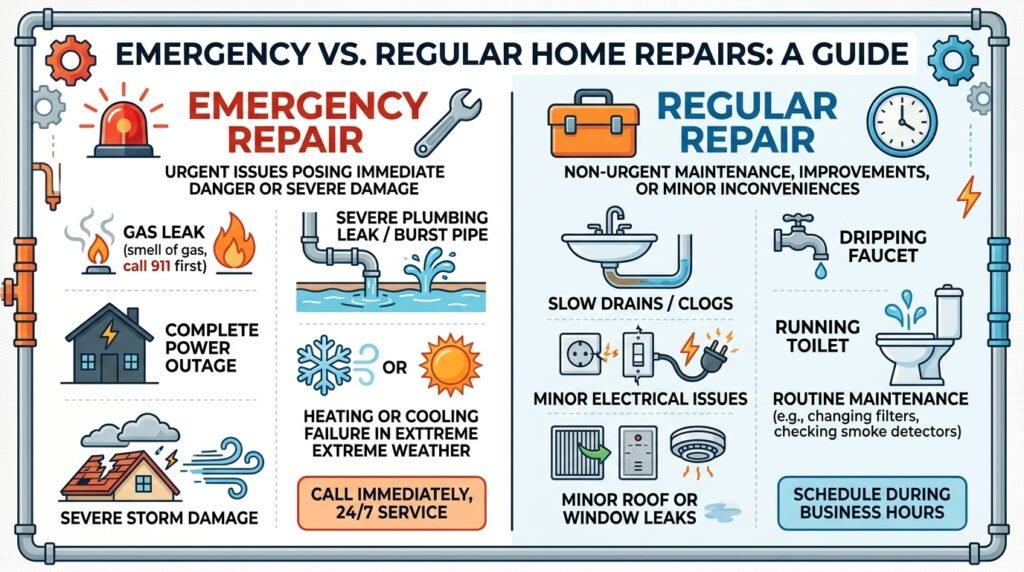
When to Call Emergency Repair (vs Regular Repair)
Call emergency repair if:
Water is actively dripping inside your home during rain.
Large section of roof is missing or has visible hole.
Tree is on your roof.
Shingles are blown off (many, not just one or two).
You see mold smell or active mold growing.
Call regular roofing contractor if:
You notice a few shingles missing but no water inside.
Small dents from hail, no leaks.
Flashing looks loose but not torn.
You want inspection after storm but no obvious damage.
Emergency roofers charge more because it’s urgent. If it’s not actually urgent, wait and get a better price. But if water’s coming in, don’t wait. That costs more money overall.
Finding an Emergency Roofer in Dayton (Right Now)
You need someone who’ll come out fast. Not days. Hours.
What to look for:
24/7 availability. They answer phones at night.
Local. Dayton-based. They know the area. Can get to you fast.
Licensed and insured. Even in emergency, verify this.
Clear about cost. Even under pressure, they quote you before starting.
References or reviews. If they’re good, they have them. Check Google reviews.
Red flags:
Pressure to pay everything upfront. Legitimate roofers take payment after work or on invoice.
No license or insurance. Walk away.
Vague about what they’re doing. You should understand what tarping costs and what repairs cost.
Won’t give you written estimate. Get something in writing.
How to find them:
Google “emergency roof repair Dayton OH” and look at reviews.
Call your insurance company. They often have preferred contractors.
Ask neighbors if they’ve had storm damage and who they used.
Check BBB (Better Business Bureau) for Dayton roofers.
If you’re stuck, your homeowners insurance can usually recommend someone or guide you to emergency services.
Insurance and Storm Damage: What to Know
Most homeowners insurance covers storm damage. Not all, but most.
What to do:
Report damage to insurance within reasonable time (don’t wait weeks).
Take photos as evidence.
Get a professional inspection (roofer’s inspection, not just insurance adjuster).
Keep all documentation and receipts for repairs.
Get estimate from contractor before doing work (insurance might want competitive bids).
What’s usually covered:
Wind damage. Hail damage. Tree damage from storms. Most of it.
What might not be:
Damage from poor maintenance (roof that was already failing).
Damage you ignored for years.
Damage from “acts of God” in some older policies (this is less common now).
The timeline:
Insurance might take days to send adjuster.
You can do emergency repairs (tarping) while waiting.
You can do permanent repairs insurance reimburses you usually.
Get it in writing what’s covered before spending thousands.
After the Emergency: What’s Next
Once water’s stopped and roof’s tarped:
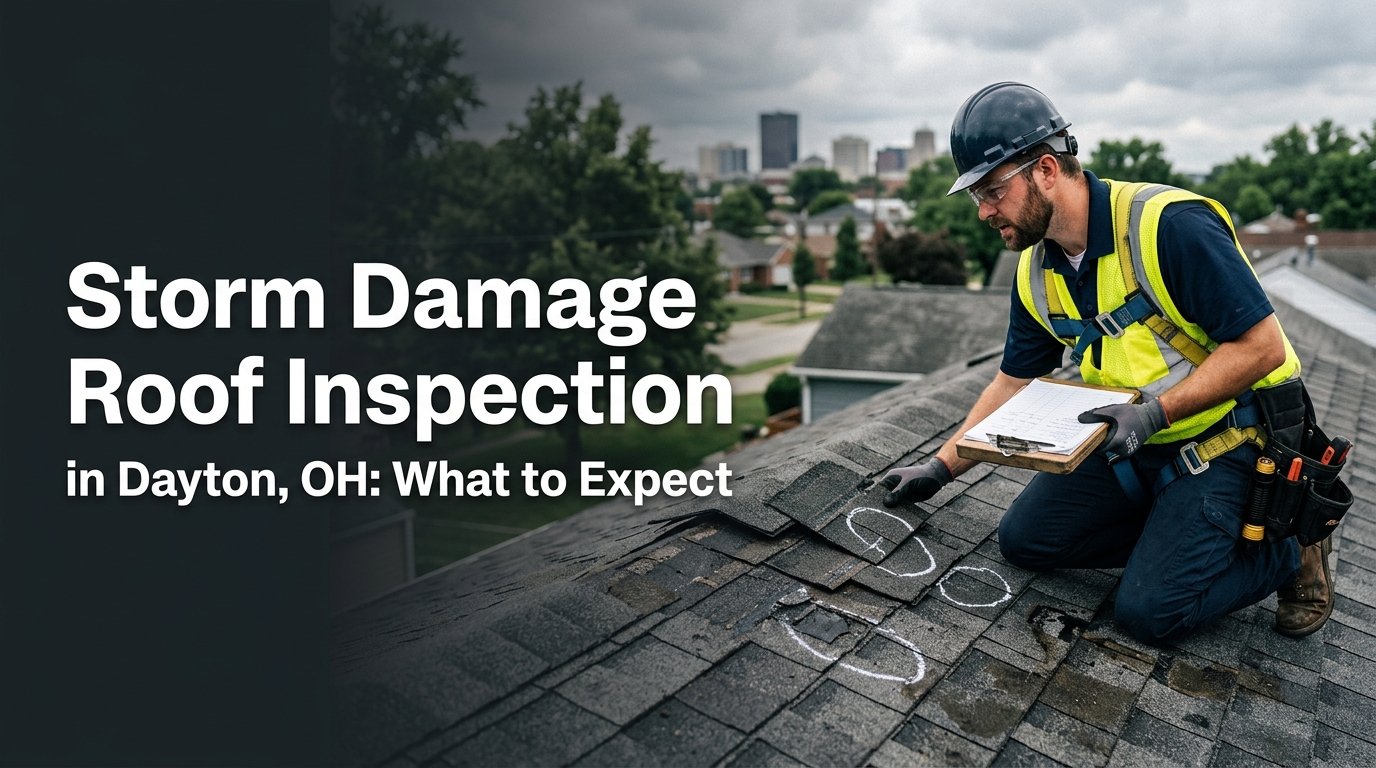
Get a full inspection. Even if you don’t see more damage, there might be hidden damage. Professional roofer inspects entire roof.
Document everything. Photos, receipts, estimates. All of it for insurance.
Get permanent repairs scheduled. Don’t rush. But don’t wait months either. Schedule when weather’s good.
Address interior damage. Wet insulation, wet drywall this needs drying out or replacement.
Don’t just ignore it. Even after tarping, you want permanent repairs within weeks, not months. Weather will keep attacking the damaged area.
Frequently Asked Questions
What should I do if water is actively leaking into my home right now?
Place buckets under leaks. Move furniture away from wet areas. Call emergency roof repair immediately. Don’t wait. Take photos for insurance. Open windows to air circulation.
How much does emergency roof tarping cost in Dayton?
Usually $300-$800 depending on damage size. It’s temporary, so not hugely expensive. But prevents thousands in water damage.
Can I put a tarp on my roof myself?
No. Improper tarping causes more damage. Wind rips it off. It gets secured wrong. Professionals know how to do it safely and effectively.
Will insurance cover emergency roof repair?
Usually yes for storm damage. Report it to insurance immediately. They’ll guide you on coverage and may recommend contractors.
How long until permanent repairs can happen?
Emergency tarping might happen same day or next morning. Permanent repairs depend on weather and contractor availability. Usually within a week or two.
What if I don’t have emergency tarping will it get worse?
Yes. Every rain, more water gets in. Damage spreads. Cost grows. Don’t skip tarping if roof’s exposed.
Should I wait for insurance adjuster before doing anything?
No. Do emergency tarping immediately to stop damage. Insurance usually reimburses emergency repairs. Waiting for adjuster while water comes in is bad decision.
Bottom line: Storm damage happens in Dayton. If water’s getting in your home, act immediately. Emergency tarping stops damage and buys you time. Call your insurance company and a local emergency roofing services today, not tomorrow. The faster you act, the less overall damage happens. You’ve got this.