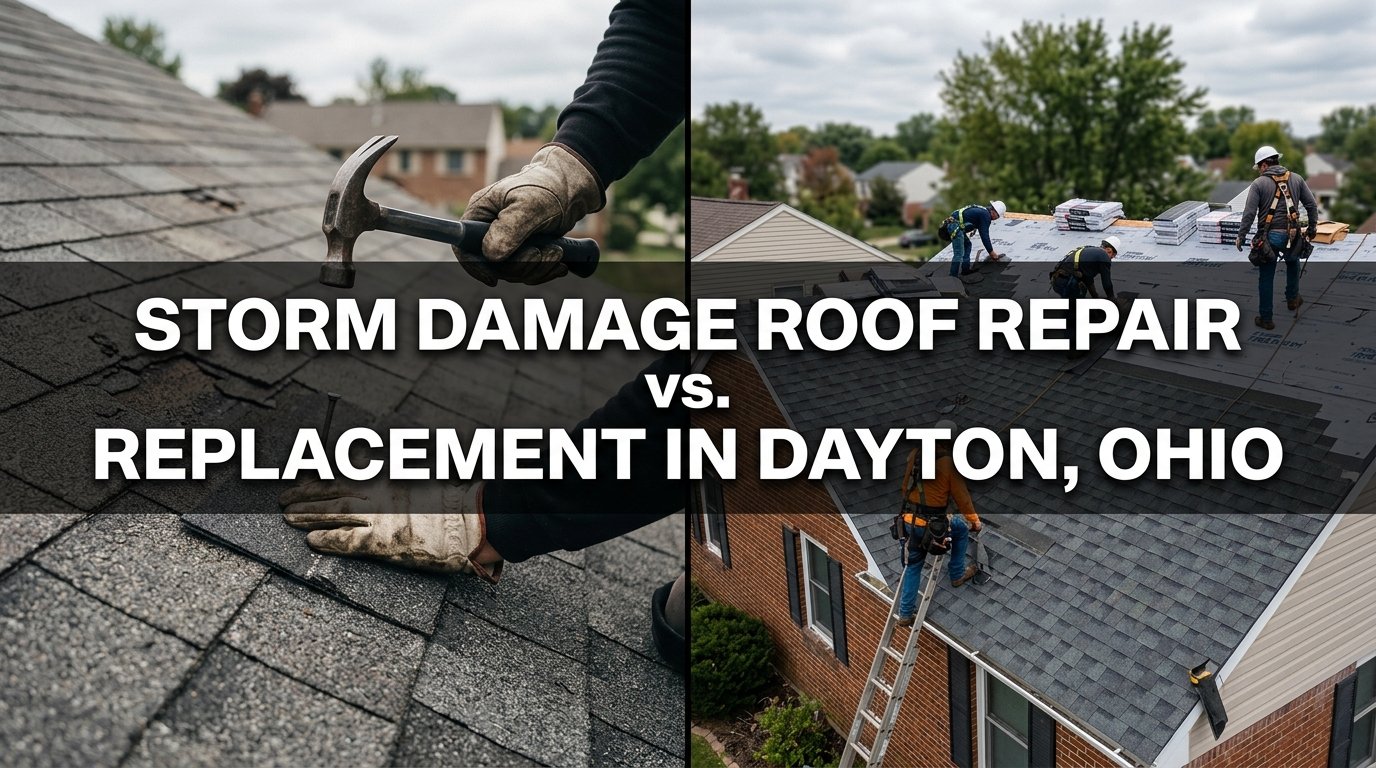
After a storm damages your Dayton roof, you’re facing a decision. Do you repair the damage or replace the entire roof? Storm damage roof repair versus storm damage roof replacement decision isn’t always obvious. The answer depends on damage extent, roof age, costs, insurance coverage, and practical considerations. This guide walks through the decision-making process so you understand when roof repair versus replacement makes sense for your specific situation.
Storm damage roof repair is appropriate for isolated damage affecting small areas. Complete roof replacement makes sense for widespread damage or aging roofs. Most situations fall somewhere in between. A professional professional roof assessment is the key to making the right decision. This guide explains the factors that influence the choice so you can have informed conversations with contractors about what’s right for your home.
When Is Repair More Likely The Right Choice?
Localized roof damage affecting a small area usually calls for repair. If damage is limited to one or two locations on the roof, repair is more cost-effective than replacement. A few missing shingles can be replaced. Roof leak repair from isolated flashing damage can be addressed without full replacement. Small areas of damaged decking can be patched. When damage is limited in scope, repair makes financial and practical sense.
Shingle matching matters for isolated repairs. If your roof is relatively recent and common shingle types are available, matching new shingles to old ones is possible. Repairs blend in and look intentional. The roof functions properly with the repair. If shingles can’t be matched, the repair looks patchy. This visual issue doesn’t affect function but might concern some homeowners.
Your roof age matters for repair decisions. A younger roof, perhaps five to fifteen years old, justifies repair investment. The roof has many years of life remaining. Repairing isolated damage extends roof life efficiently. An older roof might need replacement soon anyway. Investing heavily in repairs to an aging roof makes less sense than planning replacement in the near future.
When Is Replacement More Likely The Right Choice?
Widespread roof damage affecting multiple areas indicates replacement is the better choice. If more than twenty to thirty percent of your roof has damage, repair costs approach replacement costs. At that damage level, replacing the whole roof makes more sense than patching numerous areas. You get a complete roof with warranty rather than a patchwork of repairs.
Structural roof damage indicates replacement is necessary. If damaged decking is extensive, or if roof framing is damaged, structural integrity is compromised. This damage requires replacing the entire roof structure, not just repairing surface damage. Structural damage is serious and requires full replacement to properly address.
Roof age strongly influences replacement decisions. A roof nearing end of life, typically twenty-five years or older, should be replaced rather than repaired. You’re at the point where multiple problems might develop. Investing in repairs to an old roof is throwing money at a problem soon to be replaced anyway. Replacement gives you a new roof with decades of life remaining.
How Does Damage Severity Affect The Decision?
Localized roof damage from a storm might be superficial. A few missing shingles, bent flashing, or minor decking damage can be repaired. The underlying roof structure is sound. The damage affects only the surface or specific components. These repairs restore the roof to full function. The roof will last many more years after repair.
Widespread roof damage indicates systematic failure or major storm impact. Multiple areas have damage. Different damage types exist: missing shingles, structural damage, water penetration. This level of damage affects the roof’s overall integrity. Addressing all this damage through repair becomes expensive and complex. Replacement restores full integrity in one project rather than attempting numerous repairs.
Damage extent determines feasibility and cost-effectiveness of repair. Minor damage favors repair. Major damage favors replacement. Professional assessment determines actual damage extent. You can’t reliably estimate damage severity from ground level. Professional inspection quantifies damage and guides repair or replacement decision.
What About Missing Shingles And Partial Damage?
Missing shingles from storm damage call for partial roof repair. If a storm tore shingles from one area, replacing those shingles restores the roof. The replacement shingles should match existing ones if available. This repair typically takes a day or less. Cost is reasonable for limited shingle replacement. The roof functions properly after repair.
Partial roof repair works when damage is truly isolated. One or two shingles is different than half your roof. Repair scope matters. If “partial” means you’re replacing shingles across multiple areas in multiple locations, that’s not really partial repair. That’s approaching whole-roof work. Be honest about actual damage extent when considering partial repair.
Partial roof repair is usually the right call if your roof is less than twenty years old and in generally good condition otherwise. The storm caused isolated damage to a sound roof. Repairing that damage is logical. The roof continues functioning well for years to come after repair. Partial repair is cost-effective for truly limited damage.
How Do Costs Compare Between Repair And Replacement?
Storm damage roof repair costs depend on damage type and extent. Replacing a few missing shingles costs a few hundred dollars. Repairing flashing damage might cost five hundred to a thousand. Partial roof repair rarely exceeds two to three thousand dollars. These costs are manageable for most homeowners even without insurance.
Complete roof replacement costs significantly more. A full roof replacement in Dayton typically costs five to fifteen thousand dollars depending on roof size and material choice. This major expense is why replacement decisions matter. Insurance coverage becomes crucial at this price point. Out-of-pocket replacement costs are substantial for most homeowners.
When comparing costs, factor in deductibles and insurance coverage. If insurance covers ninety percent of replacement cost, your out-of-pocket is much lower. If insurance covers repair fully after deductible, that’s cost-effective. Compare total costs you’d pay out of pocket, not just repair or replacement prices. Insurance makes financial math different for each situation.

What Role Does Roof Age Play?
A roof five to ten years old justifies repair investment. You’re protecting an asset with many years of expected life remaining. The roof should function well for another ten to twenty years after repair depending on materials. Repair makes sense financially and practically.
A roof fifteen to twenty years old is nearing mid-life. Repair might still be justified but watch for other issues. If this storm is the first damage, repair is reasonable. If your roof is already showing age, replacement might be worth considering. Know your roof’s condition generally before making decisions.
A roof over twenty-five years old is near or past end of expected life. Replacement is the logical choice. You’re likely looking at replacement in the next few years anyway. Using repair to extend an aging roof a year or two doesn’t make economic sense. Invest in replacement and get a new roof with full warranty and decades of expected life.
Can Insurance Help With The Decision?
Insurance adjusters sometimes determine whether repair or replacement is appropriate. Their determination affects what gets covered. If adjusters recommend replacement, insurance might cover it. If they recommend repair, that’s what they’ll cover. Your insurance scope determines what work gets approved and paid for.
Insurance scope sometimes limits your choices. If insurance approves repair only, you can’t demand replacement and expect payment. If insurance approves replacement, you have flexibility to repair or replace. Understanding what your adjuster approves guides your decision. You might choose different options based on insurance approval.
Sometimes there’s disagreement about whether repair or replacement is appropriate. You think replacement makes sense but insurance recommends repair. Or vice versa. Professional assessment helps resolve disagreements. Having multiple professional opinions provides evidence for your position. This is where professional roof assessment documentation matters.
Why Is Professional Assessment The Real Decision Point?
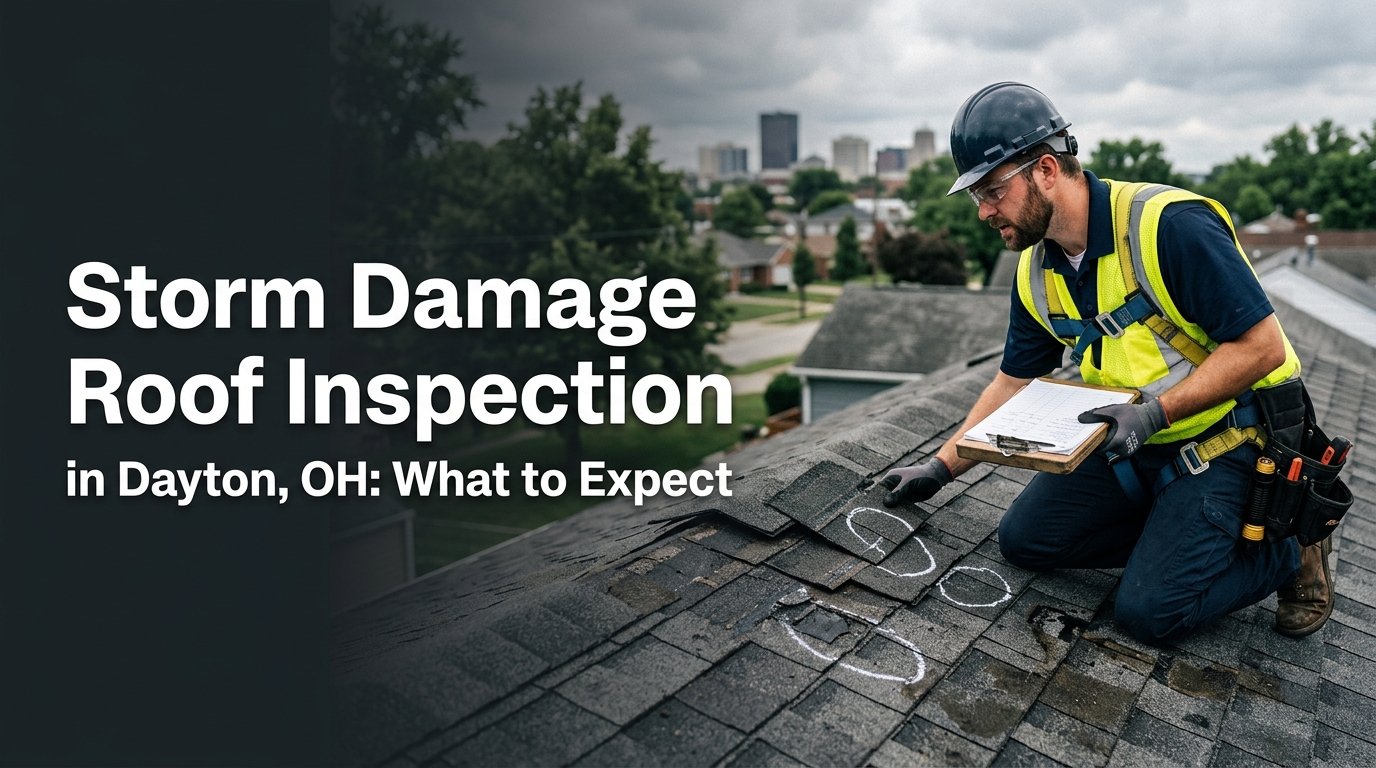
You can’t reliably determine whether repair or replacement is appropriate without professional inspection. Damage looks different from ground level than up close. Hidden damage might exist. Professional roof assessment reveals true damage extent. Professionals know what indicates structural problems versus surface damage. They know cost comparisons between repair and replacement.
Professional inspectors examine the entire roof, not just damaged areas. They assess overall roof condition. They identify other problems beyond storm damage. They determine remaining roof life. Their assessment guides logical decision-making. Without professional assessment, you’re guessing. Professional assessment removes guesswork.
Get assessment from a qualified roofing contractor. They have expertise and see roofs constantly. They know what repair versus replacement costs in Dayton. They can explain options clearly. A good contractor presents repair and replacement options objectively, letting you make informed decisions. Don’t rely on internet advice or guesses. Get professional assessment.
What About Matching Materials And Aesthetics?
Shingle matching for repairs can be difficult if your roof is old. Manufacturers discontinue shingle styles. Existing shingles fade from weathering. New shingles look noticeably newer and brighter. If matching shingles are unavailable, the repair looks patchy. Some homeowners accept this appearance. Others prefer uniform look that replacement provides.
Replacement solves matching problems. New roof uses consistent materials throughout. Everything looks uniform and intentional. Aesthetics matter if you care about curb appeal. If appearance doesn’t concern you, matching issues don’t affect the repair decision. Think about what visual result you prefer.
Material availability affects repair decisions. Sometimes specific shingles needed for matching aren’t available. Manufacturers might have changed materials. Discontinued products become hard to find. If your needed shingles aren’t available locally or require special order, repair becomes complicated. Replacement uses current materials readily available.
What About Long-Term Durability And Warranty?
Roof repair typically comes with limited warranty. Contractor warranties on repairs might be one to five years. Insurance might provide additional coverage. But repairs don’t come with full roof warranty like replacements do. If repairs fail within the warranty period, the contractor typically fixes them at no charge. After warranty expires, you’re responsible for additional repairs.
Complete roof replacement comes with substantial warranty. Manufacturer warranties on shingles typically last twenty to thirty years. Contractor warranties might include ten to twenty years on labor and materials. A warrantied replacement roof gives you peace of mind for years. If problems develop within warranty, they’re covered.
Warranty duration is one factor in repair versus replacement decision. Repairs are shorter-term solutions. Replacement is long-term protection. If you’re staying in your home long-term, replacement warranty matters more. If you plan to sell or move within a few years, repair might be sufficient.
Frequently Asked Questions About Storm Roof Repair vs Replacement
How do I know if my roof needs repair or replacement?
Professional inspection is the answer. A roofing contractor examines your roof and assesses damage. They determine whether repair or replacement makes sense based on damage extent, roof age, and condition. They provide recommendation backed by professional expertise. You can’t reliably determine this yourself from ground level. Professional assessment is the decision point. Get inspection from qualified contractor.
What percentage of roof damage means replacement is necessary?
Generally, if twenty to thirty percent or more of your roof has damage, replacement makes more sense than repair. Smaller percentages favor repair. However, damage type matters too. Structural damage might require replacement regardless of percentage. Age and condition matter. Consult professional assessment rather than percentage alone.
Can insurance force me to replace my roof instead of repairing?
Insurance adjusters determine coverage based on your policy and damage. If insurance approves replacement, you have flexibility to repair or replace. If insurance approves repair only, that’s what gets covered. You can choose differently but you’d pay the difference out of pocket. Review insurance adjuster’s recommendation before making decisions.
How much does roof replacement typically cost in Dayton?
Complete roof replacement in Dayton typically costs five to fifteen thousand dollars depending on roof size and material choice. Simple repairs cost a few hundred to three thousand dollars. Get detailed estimates from contractors for your specific situation. Costs vary significantly based on your home and damage extent.
Should I replace my roof if it’s near the end of its life anyway?
If your roof is over twenty-five years old, replacement makes sense. You’re likely replacing soon anyway. If damage is severe, replacement sooner rather than later saves money long-term. You avoid patch-and-repair cycle on an aging roof. Invest in new roof and get full warranty protection.
What if I disagree with the insurance adjuster’s recommendation?
Request meeting with adjuster and contractor to discuss findings. Sometimes disagreement resolves through conversation. If you still disagree, contact your insurance agent. They can help mediate. You might request independent adjuster evaluation. Get second professional opinion if you dispute initial assessment.