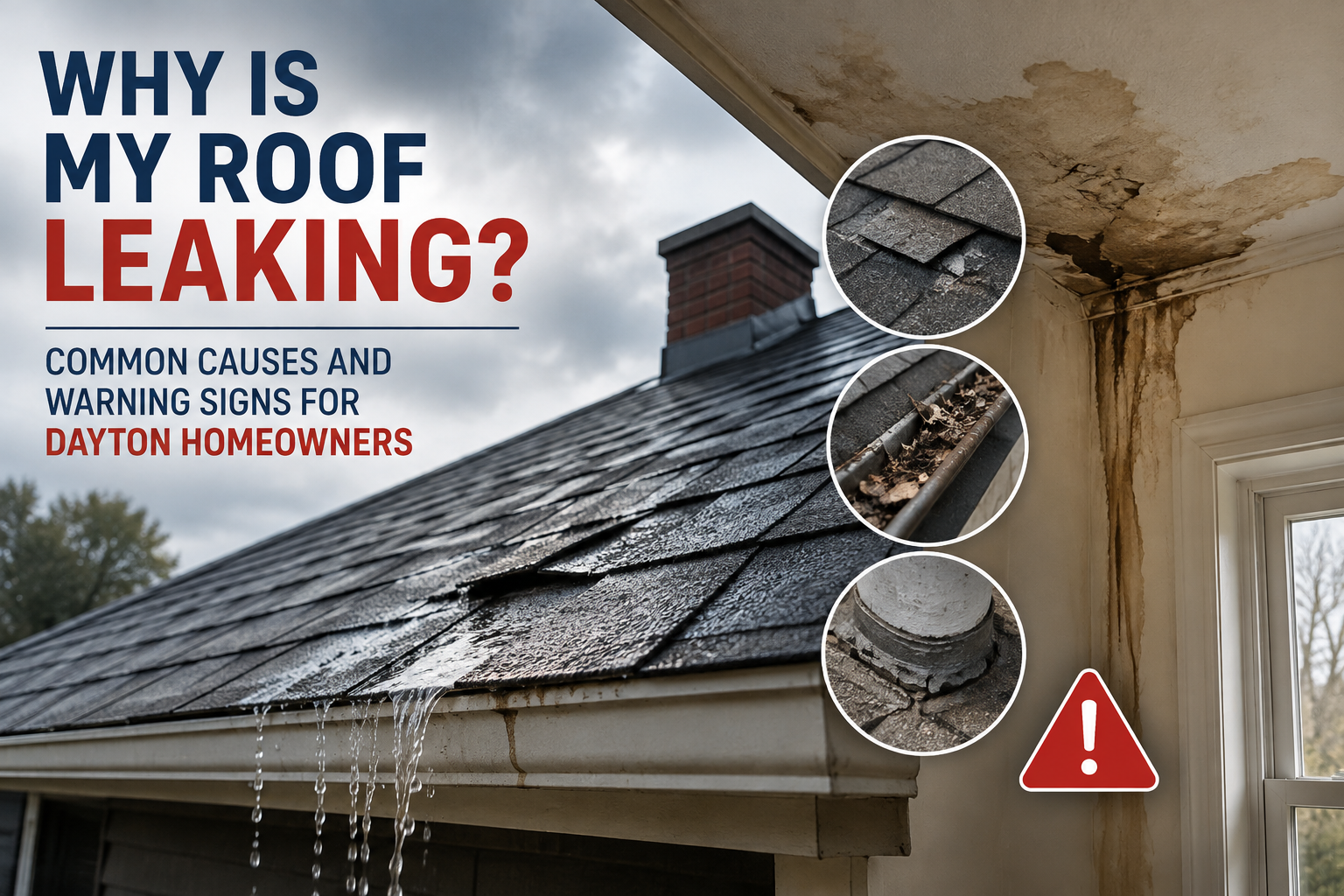

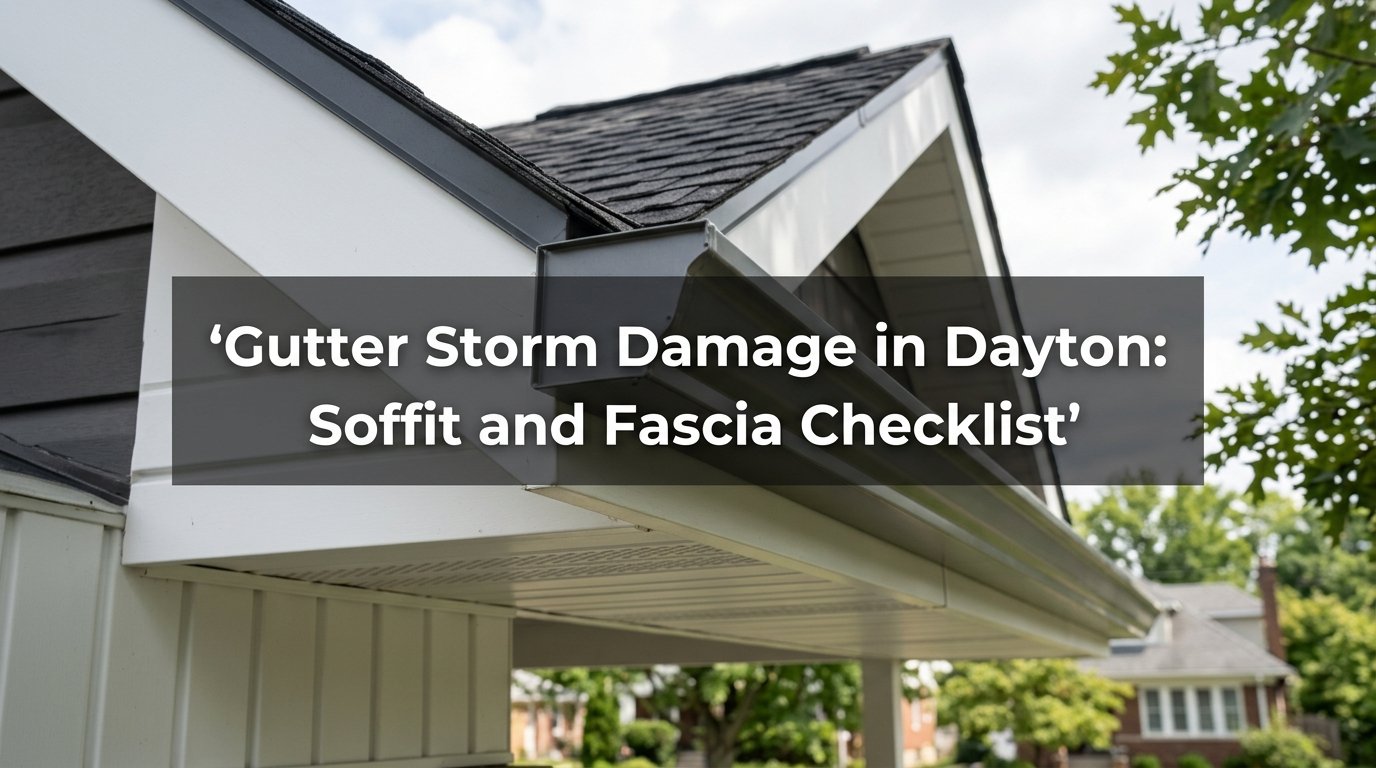
After a storm, your roof isn’t the only thing damaged. Your gutters, soffit, and fascia take a beating too. Gutter storm damage dayton is common. Storm damaged gutters cause water problems if not repaired quickly. This guide covers gutter storm damage, soffit damage, fascia damage, and flashing problems. We provide a checklist so you can systematically inspect your roofline for damage. Understanding what to look for helps you catch problems before they cause water damage to your home.
Roof storm damage dayton oh includes more than just shingles. Your entire roofline needs inspection. Exterior storm damage dayton includes all the components that protect your home’s edges: gutters, downspouts, soffit, fascia, and flashing. Damage to any of these components allows water to enter your home. This guide helps you identify roofline damage so repairs can begin promptly.
Why Does Roofline Damage Matter?
Your roofline components protect your home’s perimeter. Gutters collect water from the roof and direct it away from your foundation. Damaged gutters don’t function. Water overflows and runs down your walls. This causes foundation damage, basement leaks, and siding problems. Soffit and fascia protect the eaves and the space between your roof and walls. Damaged soffit and fascia allow pests and water into this space and into your attic.
Storm damaged gutters compromise water management. Gutters that are bent, separated, or detached don’t move water efficiently. Water overflow from damaged gutters causes foundation problems. Water pooling against your foundation causes settling and cracks. Water running down your walls causes rot and mold. Damaged roofline components create cascading problems if not repaired.
Flashing seals the connection between your roof and other structures. Damaged flashing allows water to penetrate into walls and attic spaces. Water damage from flashing problems develops slowly sometimes, making it hard to detect. By the time you notice water damage inside, significant damage might already exist. This is why roofline inspection and repair matter.
What Is A Roofline Inspection?
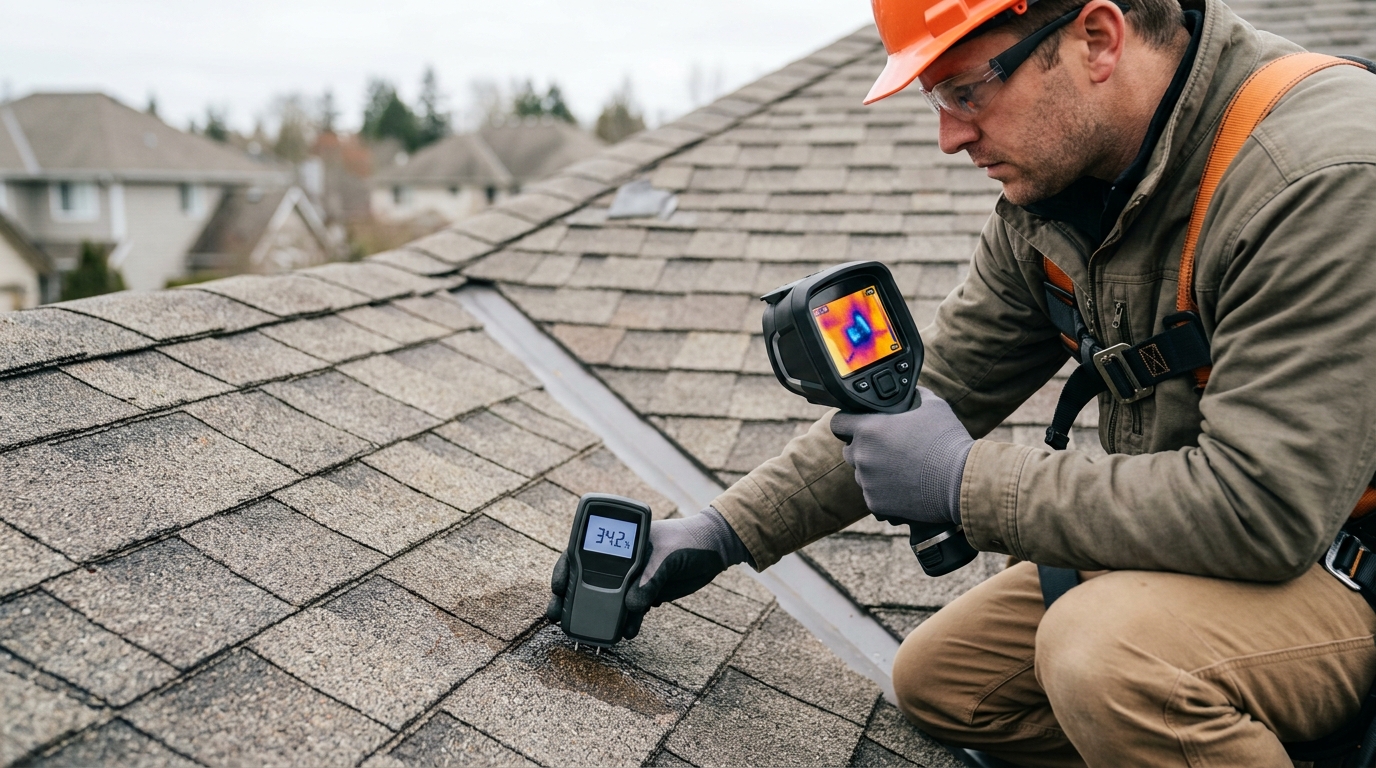
A roofline inspection systematically examines gutters, downspouts, soffit, fascia, drip edge, and flashing. The inspection looks for damage, debris, deterioration, and improper installation. Inspectors walk the roofline visually from ground level and access elevated areas if safe. They look for damage patterns, assess severity, and recommend repairs. A complete inspection prevents missing damage.
Wind damage on rooflines is common. High winds bend gutters, tear downspouts loose, and rip soffit and fascia from the house. Gutters can be separated from the house or torn completely free. Downspouts can be bent or disconnected. Hail dents on gutters and metal soffit create cosmetic damage. Hail dents don’t necessarily compromise function but indicate impact damage occurred.
The inspection includes checking flashing at valleys, vents, and edges. It includes checking soffit and fascia condition. It includes checking for debris accumulation that indicates roof or gutter problems. Comprehensive roofline inspection finds all damage needing repair.
What Are The Signs Of Gutter Damage?
Storm damaged gutters show obvious signs. Detached gutter sections hang away from the house or are completely missing. Bent gutters are dented or twisted from impact. Damaged downspouts are bent, separated, or torn. Gutters separated from hangers hang loosely or drag at the foundation. These obvious signs clearly indicate damage requiring repair.
Look for water staining on gutter undersides or on fascia below gutters. This staining indicates water is pooling or overflowing from the gutter. Look for gutter seam leaks where sections are joined. Storm stress can separate seams or crack joints. Water leaking from seams indicates damage. Look for debris accumulation indicating clogs that prevent proper drainage.
Gutter granules in gutters indicate roof damage. Shingles are shedding granules into the gutter. This is visible damage indicator telling you to inspect the roof. Presence of many shingle pieces or excessive granules indicates roof damage occurred. Some granule loss is normal but sudden large amounts indicate storm damage.
What Are The Signs Of Soffit Damage?
Damaged soffit panels look obvious. Soffit is the undersurface of the eaves. Vinyl or aluminum soffit panels are visible from ground level. Look for broken or cracked panels. Look for panels that are bent or dented. Look for separated panels where loose fascia pulls soffit away from the house. Wind damage often rips soffit panels loose or tears them.
Look for soffit that’s rotted or deteriorating. Rotted fascia and soffit indicate water damage and decay. Water penetration causes soffit and fascia to deteriorate. Rotted components need replacement. Soffit damage allows pests and water into the attic space. Damage to soffit requires prompt repair.
Look for gaps between soffit and the wall. Soffit should attach tightly and seal properly. Gaps indicate damage or improper installation. Gaps allow pests and water intrusion. Look for discoloration on soffit indicating moisture or water staining. Any visible soffit damage warrants professional inspection and repair.
What Are The Signs Of Fascia Damage?
Fascia board damage ranges from minor to severe. Fascia is the board behind the gutter. Look for cracked or split boards. Look for boards that are bent or dented. Loose fascia pulls away from the wall. Damaged flashing at the edge where fascia meets roof indicates water intrusion. Fascia damage usually indicates gutters need attention too.
Rotted fascia is serious. Rot indicates ongoing water damage. The board has deteriorated from moisture exposure. Rotted fascia needs immediate replacement because it can’t provide proper support. Gutters attached to rotted fascia aren’t supported properly. The entire roofline system fails when fascia rots.
Look for paint peeling or blistering on fascia. This indicates moisture getting into the wood. Look for water staining on fascia. This indicates water has been running down the fascia from gutter overflow. Look for splintering or weathered wood. Any fascia damage should prompt professional inspection and repair.
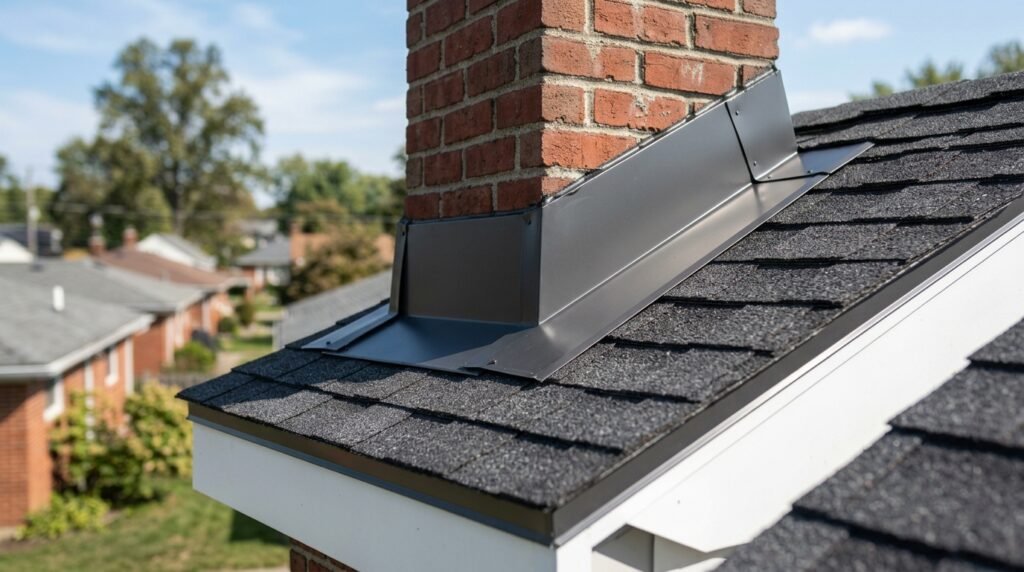
What About Roof Edge And Flashing Damage?
Roof edge damage occurs at the perimeter where the roof meets fascia. The drip edge is flashing that directs water off the roof edge into the gutter. Damaged flashing at the roof edge allows water to run behind the fascia. This causes hidden water damage you don’t see until problems develop. Inspect the roof edge closely for bent, separated, or missing flashing.
Look at transitions where roof planes meet. These valleys concentrate water and are vulnerable to damage. Look where vents penetrate the roof. Flashing around vents is common failure point. Look where chimneys meet the roof. Chimney flashing damage causes water to run into walls. Any flashing damage should be addressed promptly.
Storm winds can bend flashing, separate it from the roof, or create gaps. Water penetrates these gaps and causes interior damage. Flashing damage often isn’t obvious from ground level but shows up as interior water damage. Professional inspection reveals flashing problems that ground-level observation misses.
What’s In A Roofline Damage Checklist?
A homeowner checklist should include systematic inspection of all roofline components. Check gutters from ground level for bending, separation, or obvious damage. Check downspouts for damage and proper connection. Check where gutters attach to fascia for separation or damage. Check for debris in gutters indicating clogs.
Check soffit for cracked, bent, or separated panels. Look for discoloration or rotting. Check for gaps between soffit and walls. Check fascia for cracks, warping, or rotting. Look for paint issues indicating moisture. Check for water staining showing water damage.
Check the roof edge for proper flashing and drip edge. Check for bent or separated flashing. Check where roof planes meet for flashing damage. Check vent and chimney flashing for damage. Check downspout drainage to ensure water flows away from foundation. Document findings with photos for contractor review.
What Should You Do If You Find Damage?
Contact your insurance company if damage is storm-related. Storm damage is typically covered by homeowners insurance. Report the damage and begin the claims process. Schedule professional inspection to document all roofline damage comprehensively. Professional documentation supports insurance claims and guides repairs.
Get repair estimates from qualified contractors. Get at least two estimates comparing damage findings and repair scope. Choose a contractor with good reputation and insurance claim experience. Work with contractors to coordinate with insurance company. Complete repairs before additional storm or water damage occurs.
Don’t delay roofline repairs. Drainage problems from damaged gutters cause foundation issues. Water overflow causes mold and mildew. Damaged soffit and fascia allow pests into your home. The sooner you repair roofline damage, the sooner you prevent secondary damage.
Frequently Asked Questions About Roofline Storm Damage
How much does gutter repair typically cost in Dayton?
Gutter repair costs depend on damage extent and type. Repairing detached gutters or damaged sections might cost two hundred to one thousand dollars. Replacing extended gutter runs costs more. Seamless gutter replacement costs more than sectional gutter repair. Get contractor estimates for your specific damage. Most damage from single storms falls in the five hundred to two thousand dollar range.
Can damaged gutters be repaired or do they need replacement?
Small damage might be repairable. Separated or bent gutters can sometimes be straightened and reattached. Gutter seam leaks might be sealed. However, extensive damage usually requires gutter replacement. If gutters are significantly damaged, replacement might be more cost-effective than repair. Professional assessment determines whether repair or replacement is appropriate.
What’s the difference between soffit and fascia?
Soffit is the undersurface of the roof overhang, visible from below. Fascia is the board that runs along the edge of the roof, behind the gutter. Both components work together to protect and finish the roofline. Both are vulnerable to storm damage. Both need to be in good condition for the roofline to function properly.
Should I clean my gutters after a storm?
Yes, if safe to do so. Check gutters for debris after storms. Debris clogs gutters and prevents water drainage. Debris combined with damaged gutters creates water overflow problems. If gutters are damaged, don’t risk climbing on a ladder to clean them. Wait for professional repair first. If gutters are intact, clearing debris helps them function better.
Will insurance cover gutter and soffit damage from storms?
Most homeowners insurance covers roof storm damage dayton oh including gutter damage. Coverage depends on your specific policy. Some policies cover soffit and fascia damage. Some have limitations or exclusions. Review your policy or ask your insurance agent about coverage for roofline components. Storm damage is typically covered but specifications vary.
How do I prevent roofline damage from future storms?
Maintain gutters and roofline components year-round. Keep gutters clear of debris. Check for loose components and tighten them. Address small damage before it becomes major. Consider upgrading to seamless gutters which are more durable. Consider gutter guards which protect gutters from debris and some storm damage. Regular maintenance reduces damage risk.