
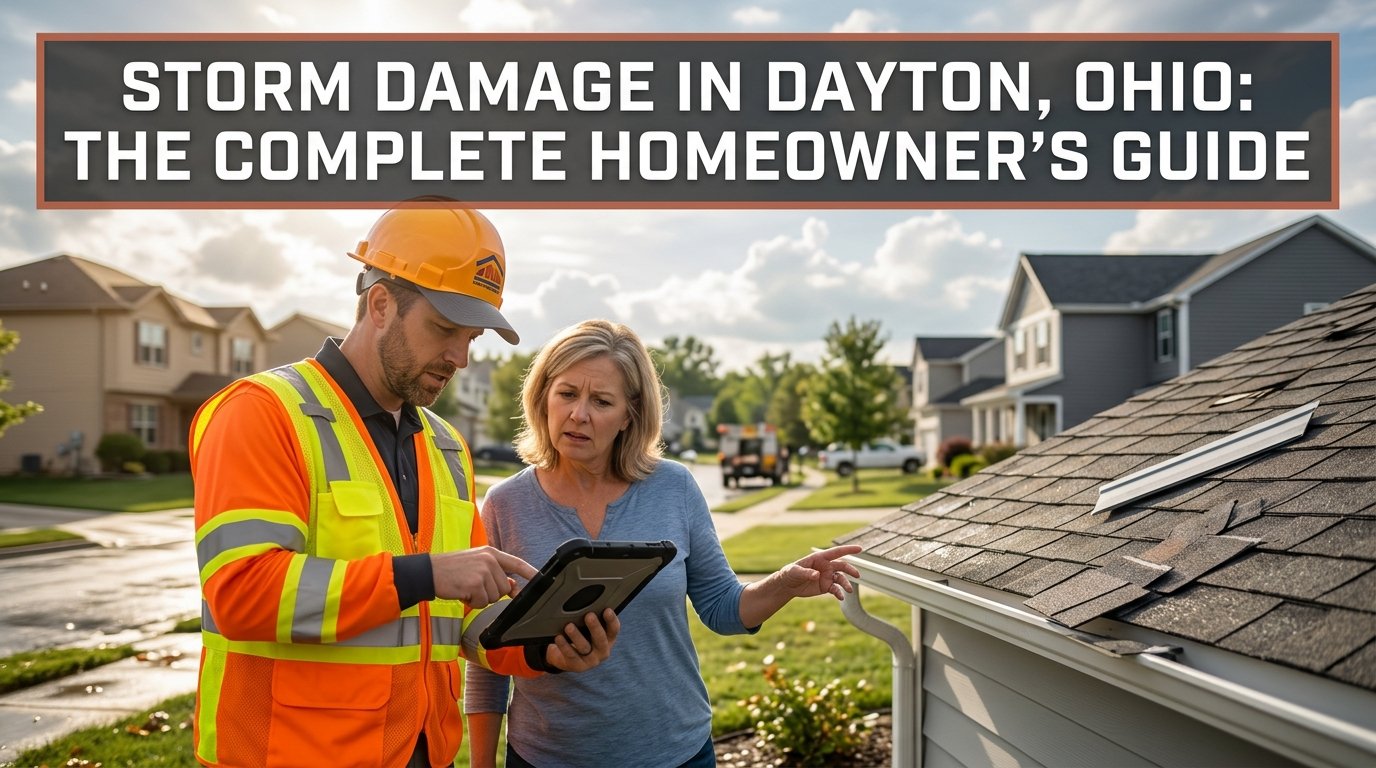
A storm rolls through Dayton and you wake up to damage. Your roof’s got missing shingles. Your gutters are hanging funny. You’re wondering what to do next. Dayton storm damage happens regularly here in Ohio. We get windstorms, hail, heavy rain events, and occasional severe weather that batters homes. Most homeowners don’t know what to look for after a storm or how to handle the damage properly.
This guide covers everything about storm damage in dayton ohio from identifying what’s actually damaged to getting it repaired. We talk about roof damage after a storm, how to spot problems, what to do immediately, and how to work with insurance. Understanding dayton ohio storm damage helps you act quickly and get your home protected before secondary damage happens. Dayton’s weather patterns create specific storm damage scenarios that local homeowners need to understand.
What Exactly Counts As Storm Damage?
Storm damage is physical harm to your property caused by severe weather events. Wind, hail, lightning, heavy rain, ice, or falling trees all cause storm damage. The key is that the damage results from weather, not gradual deterioration or poor maintenance. Insurance companies distinguish between storm damage and normal wear and tear. Understanding this difference matters when you’re filing claims.
Roof damage after a storm is the most common type homeowners deal with. Shingles get torn off. Flashing gets bent. Gutters get knocked loose. Interior water damage happens when the roof lets water in. Wind-driven rain gets under siding. Hail creates dents and punctures. All of this is storm damage that insurance typically covers if you have the right coverage.
Exterior storm damage includes siding damage, window damage, damage to decks or fences, and damage to soffit and fascia. Anything exposed to weather can get damaged in a severe storm. The scope of damage varies depending on storm severity and your home’s exposure. Some storms cause scattered damage. Others cause widespread damage across your whole property.
What Are The Most Common Storms That Damage Dayton Roofs?
Dayton experiences multiple types of storms that damage roofs. Dayton storm season peaks in spring and early summer, though damaging storms can happen year-round. Severe thunderstorms bring straight-line winds that can exceed sixty miles per hour. These winds tear shingles and lift entire sections of roofing. Derechos occasionally hit Ohio and cause extreme damage across entire regions.
Hail damage is common in Ohio. Hailstones ranging from marble-sized to golf-ball-sized pummel roofs. Hail damage creates dimples and punctures in shingles that compromise the roof’s protective layer. Many homeowners don’t realize they have hail damage because it’s not always obvious from ground level. The damage shows up when water starts leaking or when an inspection reveals the abuse.
Wind damage ranges from minor to catastrophic. High winds during storms can lift shingles, expose the wood underneath, and allow water infiltration. Trees fall during wind events and land on roofs creating massive damage. Wind damage often happens suddenly during the storm so homeowners discover it after the fact. Some wind damage is obvious. Other wind damage is subtle and requires professional inspection to identify.
What Are The Signs Of Visible And Hidden Roof Damage?
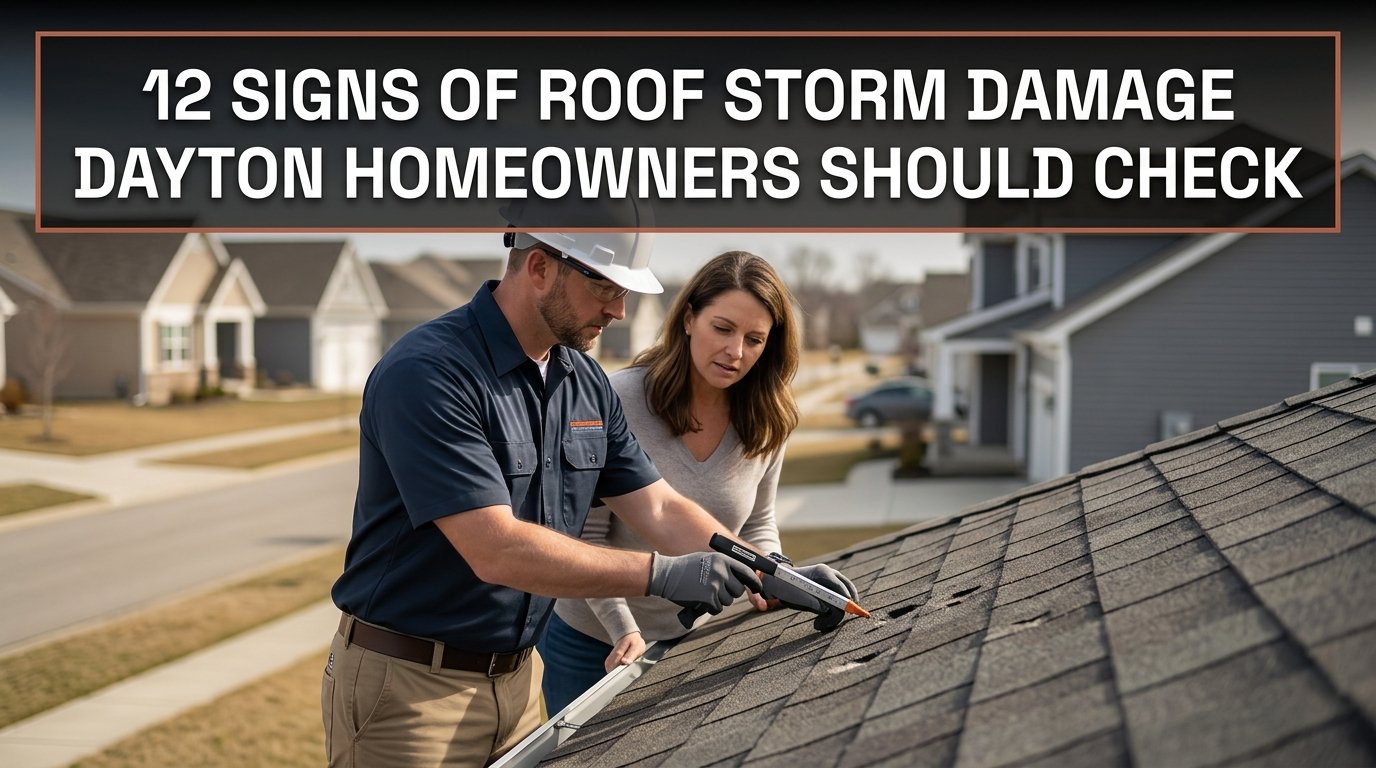
Damaged roof shingles are the most obvious sign of storm damage. You can see missing shingles. You can see shingles that are torn, curled, or bent. Missing shingles leave the underlayment exposed. This exposed area allows water to leak into your home. Lifted shingles where shingles are partially torn up but still somewhat attached also let water underneath. These visible signs tell you roof damage exists and needs attention.
Roof leaks often develop immediately after a storm. Water drips from your ceiling or you see stains on interior walls and ceilings. Sometimes leaks develop days or weeks after the storm as water gradually seeps through damaged areas. Interior damage might be your first sign that roof damage occurred. By the time you see water inside, the roof’s already been compromised.
Damaged flashing around chimneys, vents, and skylights is common storm damage. Flashing is the metal that seals gaps between roofing and other structures. Storm winds can bend or loosen flashing, allowing water to leak around those penetrations. Damaged flashing might not be obvious from ground level but shows up during professional inspection. This hidden damage causes water problems if not repaired.
What Should Homeowners Do Immediately After A Storm?
First step after a storm is safety. Don’t climb on your roof. Shingles might be loose and you could fall. Don’t try extensive cleanup in the storm’s immediate aftermath. Focus on preventing secondary damage. If there’s a hole or significant damage allowing water in, cover it with a tarp to prevent interior water damage. Call a professional for emergency roof tarping if needed.
Document everything with photos and video. Take pictures of visible damage from ground level. Get photos of missing shingles, damaged gutters, fallen branches. Document the storm itself if possible. This documentation helps with insurance claims. Write down the date and time of the storm and what damage you noticed. Keep records of all conversations with contractors and insurance companies.
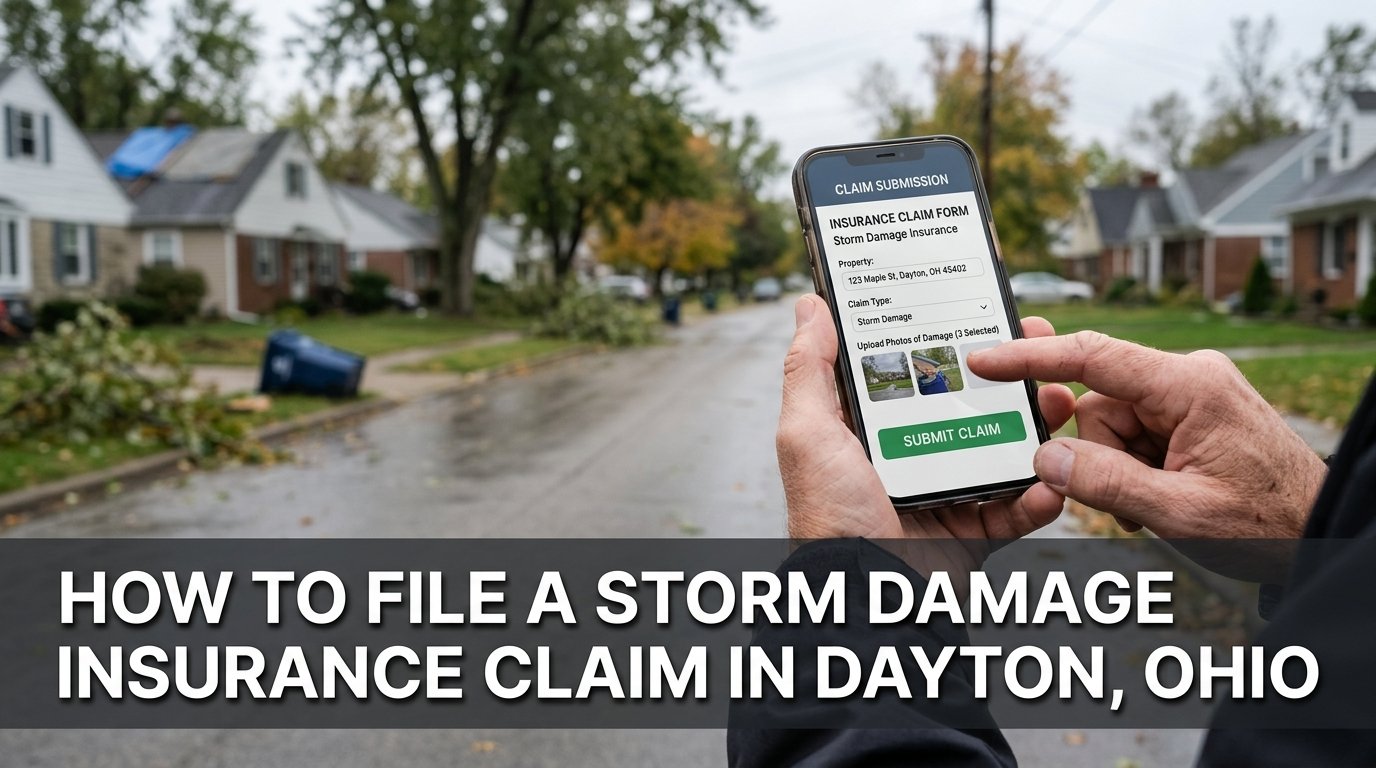
Call your insurance company within days of the storm. Report the damage and start the claim process. Insurance companies have specific timeframes for reporting. Delaying the claim can cause problems. Ask your insurance company about coverage and whether you need a deductible met. Some homeowners have additional coverage for weather damage. Understanding your policy helps you know what’s covered.
When Does Roof Damage Become An Emergency?
Emergency roof tarping is necessary when water is actively leaking into your home. Don’t wait if you see water dripping from your ceiling. This secondary water damage costs money and can cause mold and structural problems. Tarping the roof temporarily stops the leak until permanent repairs happen. Emergency tarping is usually available same-day from roofing contractors.
Large areas where the roof structure is exposed create emergency situations. If shingles are missing from a large section or the roof deck is exposed, water will pour into your home during rain. This damage needs immediate attention. Waiting days or weeks to repair extensive roof damage causes exponential damage from water intrusion.
Structural damage where the roof is sagging or bowing is an emergency. This indicates damage beyond the surface shingles. It might indicate structural failure. You need professional assessment immediately. Don’t delay on structural damage because it can become dangerous. A roof can collapse if damage is severe enough.
What Happens During A Storm Damage Inspection?
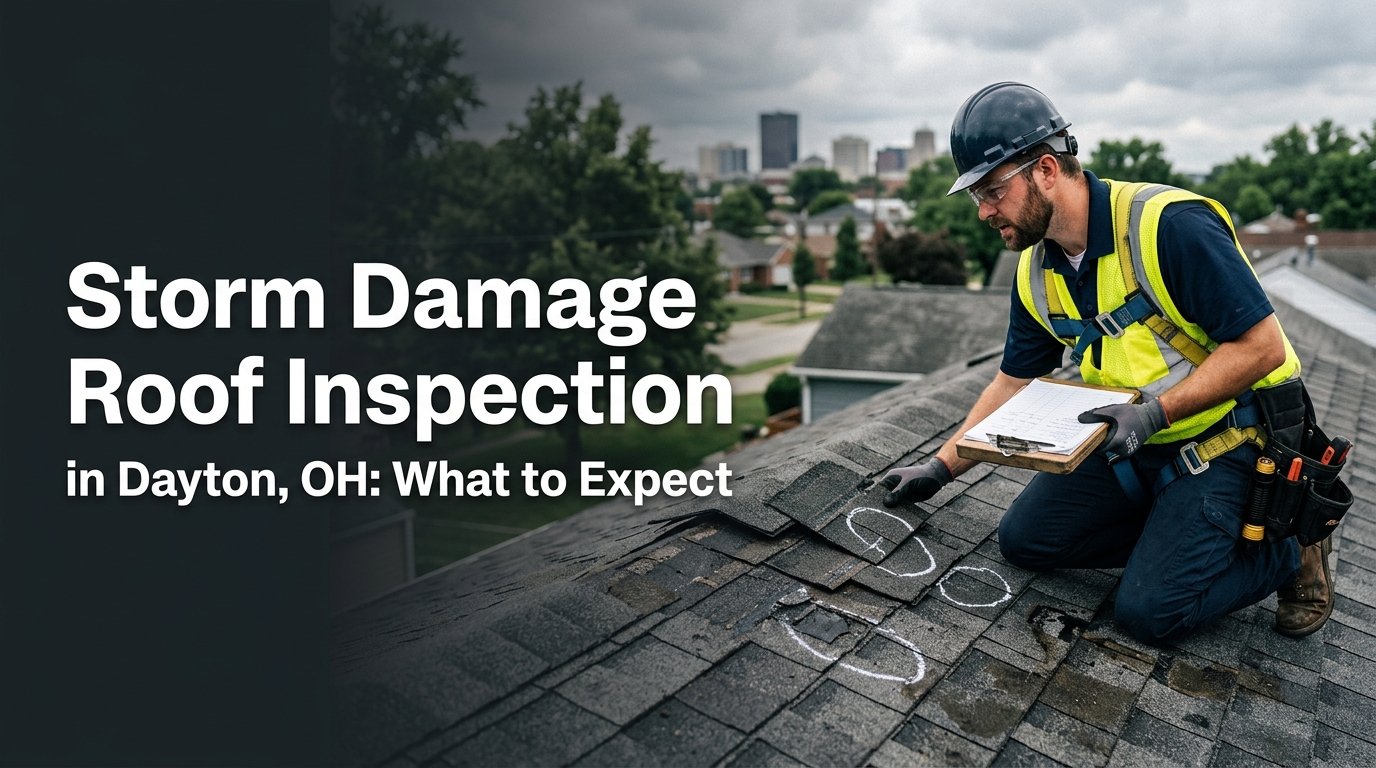
A storm damage inspection is thorough assessment of roof and exterior damage caused by the storm. Professional inspectors climb on the roof and examine shingles, flashing, vents, and the overall roof structure. They look for damaged roof shingles, missing shingles, lifted shingles, and damage to underlying materials. They inspect gutters and downspouts for damage or improper attachment.
The inspection includes checking for water damage inside the home. Small leaks might be obvious from ceiling stains but other water damage isn’t immediately visible. Inspectors look in attics, crawl spaces, and other areas where water might have entered. They document everything with photos and detailed notes. This creates a record for insurance purposes and for the contractor doing repairs.
Professional roof assessment typically takes one to two hours depending on roof size and damage extent. The inspector provides a detailed report listing all damage found. This report becomes crucial for insurance claims. The inspector can also estimate repair costs and recommend whether repair or replacement is necessary. Their assessment guides your decisions about what to do next.
How Do You Document Damage For Insurance?
Documentation is essential for insurance claims. Take photos of all visible damage from safe angles. Get close-ups of damaged shingles and wide shots showing damage patterns. Document damage to gutters, siding, and other exterior elements. Take interior photos showing water damage or staining on ceilings and walls. Timestamps on photos help establish the timeline.
Create a written inventory of damage. List specific areas damaged. Describe the damage in detail. Note the date and time of the storm. Include weather conditions if possible. This written documentation supports your claim. Insurance adjusters use this information to process your claim and determine coverage.
Keep all receipts and estimates from contractors. If you make temporary repairs like emergency tarping, keep those receipts. Document all communications with insurance company. Write down claim numbers, adjuster names, and dates of conversations. This creates a paper trail that protects you if disputes arise about coverage or claim decisions. Organized documentation speeds up the claim process.
Should You Repair Or Replace Your Damaged Roof?
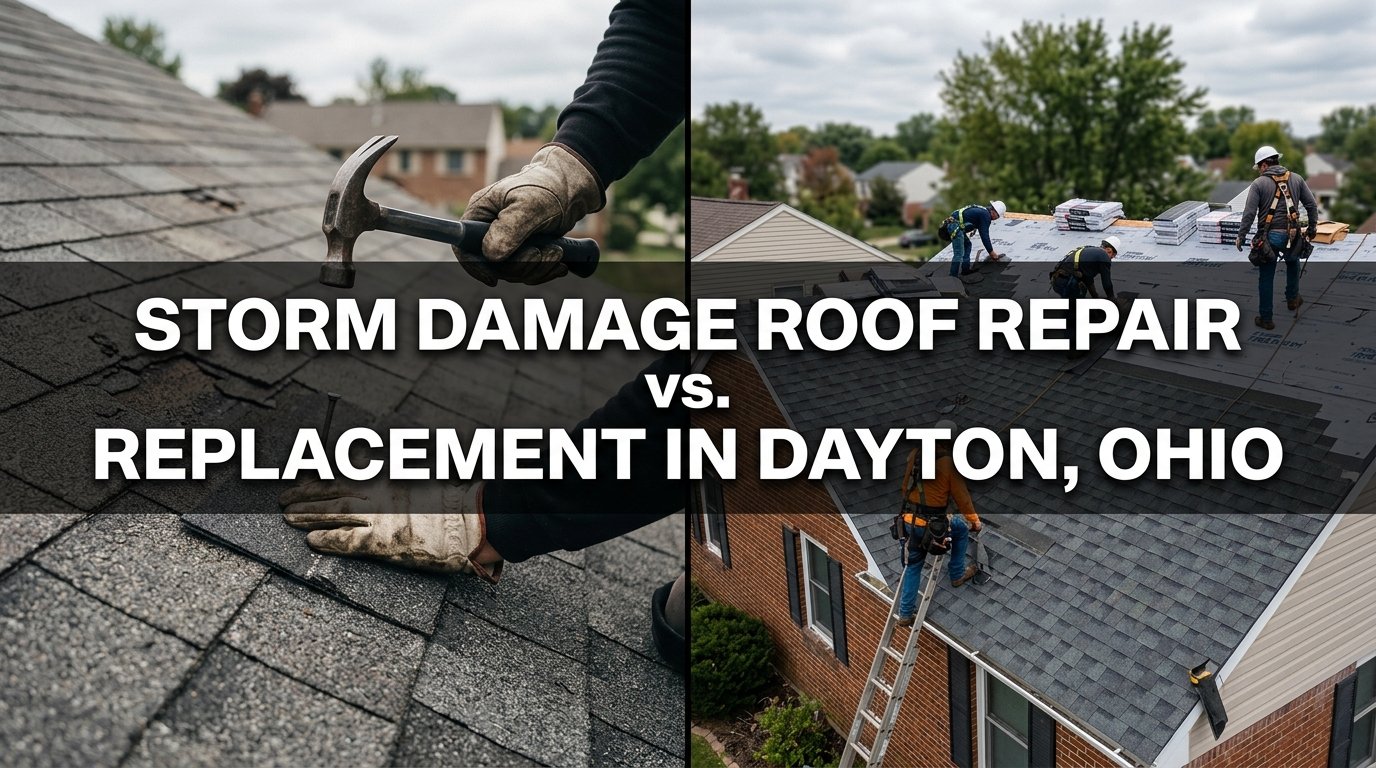
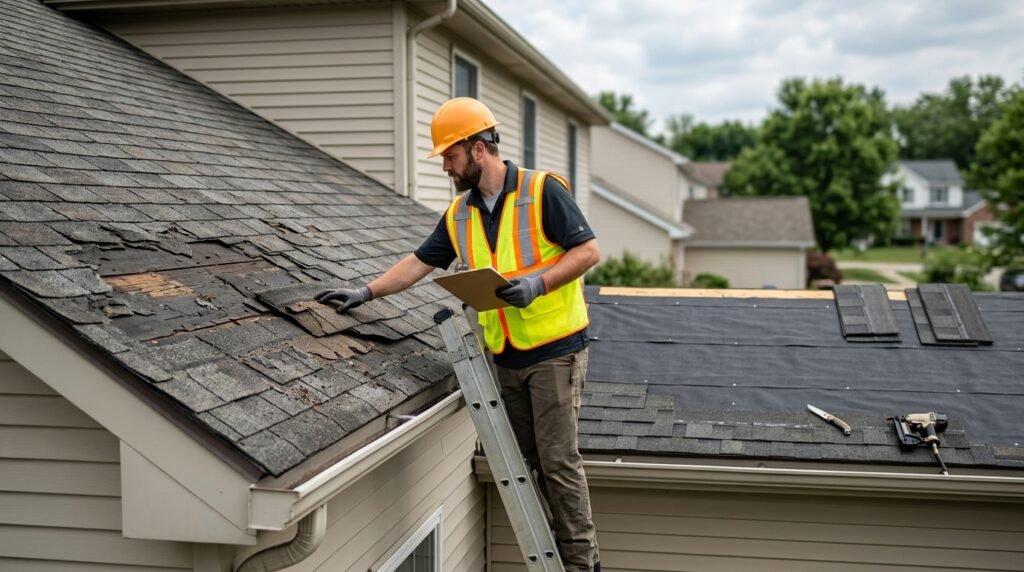
The answer depends on damage extent and roof age. Roof repair makes sense for isolated damage affecting small areas. Missing shingles can be replaced. Damaged flashing can be repaired or replaced. Localized water damage can be addressed through targeted repairs. If most of your roof is undamaged, repair is the logical choice.
Roof replacement becomes necessary when damage is extensive. If more than twenty to thirty percent of your roof has damage, replacement usually makes more financial sense than repair. A roof that’s old and was already near end of life gets replaced rather than repaired. Damage that’s hard to repair because of roof design or material availability might make replacement the better option.
Insurance typically covers repairs if damage is from a covered peril. Sometimes insurance will cover replacement if damage justifies it. Check your policy and work with your insurance adjuster to understand what’s covered. Your contractor can advise whether repair or replacement makes sense for your specific situation. Cost isn’t the only factor. Roof longevity and performance matter too.
What About Gutter, Soffit, And Fascia Damage?
Gutter damage happens frequently in storms. Gutters get bent, torn, or ripped away from the house. Downspouts get damaged or disconnected. Clogged gutters overflow and cause water damage to fascia and foundation. During storms, heavy rain overwhelms gutters. Damaged gutters can’t handle normal rainfall afterward. Water damage to siding and foundation accelerates when gutters aren’t working properly.
Soffit damage and fascia damage go hand in hand with gutter damage. Fascia is the board behind the gutter. Soffit is the underside of the eaves. Both protect the roof overhang and help ventilate the attic. Wind and rain damage both components. Exposed fascia or soffit allows water and pests to enter the eaves. Damage to these components needs attention before secondary damage happens.
Repairing gutters, soffit, and fascia is often part of storm damage claims. If gutter damage is documented, insurance usually covers replacement. Some homeowners use this opportunity to upgrade to better gutter systems or add gutter guards. Seamless gutters are more durable than sectional gutters. Gutter guards prevent leaves from clogging the system. These upgrades protect against future damage.
How Does The Storm Restoration Process Work?
Residential storm restoration starts with assessment and documentation. Once you’ve reported damage to insurance and gotten a professional assessment, you understand the scope of work needed. You select a contractor, get detailed estimates, and choose materials for repairs or replacement. The process moves through planning, permitting if needed, and then actual repair work.
Temporary measures like emergency tarping might be in place initially. Permanent repairs follow. This might involve replacing shingles, repairing flashing, fixing gutters, replacing damaged soffit or fascia, and addressing water damage inside the home. The contractor coordinates the work, ensures permits are obtained if necessary, and manages the timeline. Quality contractors keep you informed throughout the process.
Insurance adjusters might need to inspect work before final payment. Some insurers approve payment after assessment. Others require inspection of completed work. Understanding your specific insurance requirements prevents surprises. Your contractor should be experienced working with insurance companies and can help navigate this process. Complete documentation throughout the restoration helps resolve any disputes with insurance.
How Do You Select A Local Storm Damage Contractor?
Finding the right contractor matters. Ask for references from contractors you’re considering. Call those references and ask about their experience. Did the contractor handle storm damage properly? Was communication good? Were they reliable? References tell you a lot about contractor quality and reliability. Contractors with many positive references are usually safer choices than those with few or negative references.
Check contractor licensing and insurance. Make sure they’re licensed to do the work in your state and local area. Verify they have liability insurance and workers compensation insurance. Working with unlicensed or uninsured contractors creates problems if something goes wrong. You could be liable for injuries or damage. Licensed, insured contractors protect you and guarantee they meet industry standards.
Get multiple estimates before choosing. At least three estimates let you compare pricing and scope of work. Be wary of estimates that are drastically lower than others. Sometimes low estimates indicate corners being cut or inexperience. Be suspicious of extremely high estimates that include unnecessary work. Mid-range estimates from qualified contractors are usually your safest bet.
Frequently Asked Questions About Dayton Storm Damage
What should I do immediately if I discover storm damage?
Document damage with photos and video from safe angles. Don’t climb on your roof or do risky cleanup. Call your insurance company within days to report the damage and start the claim process. If water is leaking into your home, call a roofing contractor for emergency roof tarping to prevent secondary damage. Schedule a professional roof assessment to document all damage for insurance purposes.
How much does it typically cost to repair storm damage in Dayton?
Repair costs depend entirely on damage extent and type. Small repairs like replacing a few shingles might cost a few hundred dollars. Extensive damage requiring roof replacement could cost five to fifteen thousand dollars or more. Most homeowners have insurance that covers storm damage, so out-of-pocket costs depend on your deductible. Get detailed estimates from contractors to understand specific costs for your damage.
Will insurance cover my storm damage in Ohio?
Most homeowners insurance policies cover damage from severe weather events like hail and wind. Coverage depends on your specific policy and the type of damage. Gradual deterioration isn’t covered. Water damage from poor maintenance isn’t covered. But damage from storms usually is. Review your policy or call your insurance agent to understand exactly what’s covered. Some homeowners benefit from additional weather coverage.
Can I claim storm damage if I don’t have visible signs?
Yes, roof leaks and water stains on ceilings are signs of damage. Interior water damage counts as storm damage evidence. Hidden damage like damaged flashing or lifted shingles might be discovered during inspection. Professional inspectors find damage that isn’t obvious. Document everything including interior water damage with photos. Your insurance adjuster can help determine whether damage is covered.
How long does the storm damage repair process typically take?
Simple repairs might take a few days. Extensive work needing roof replacement takes longer, usually a week to two weeks depending on roof size and weather. Emergency tarping happens immediately, often same day. The timeline also depends on insurance claim processing which can take days or weeks. Permitting requirements in some areas add time. Your contractor can provide realistic timeline estimates based on the specific work needed.
Should I use my homeowner’s insurance for storm damage or pay out of pocket?
That depends on damage cost and your deductible. If repairs cost less than your deductible, out-of-pocket payment makes sense. If damage cost exceeds your deductible by a lot, using insurance makes sense financially. Consider whether you expect other claims soon that might affect your insurance rates. Each situation is different. Review your specific policy to understand coverage and deductibles.