

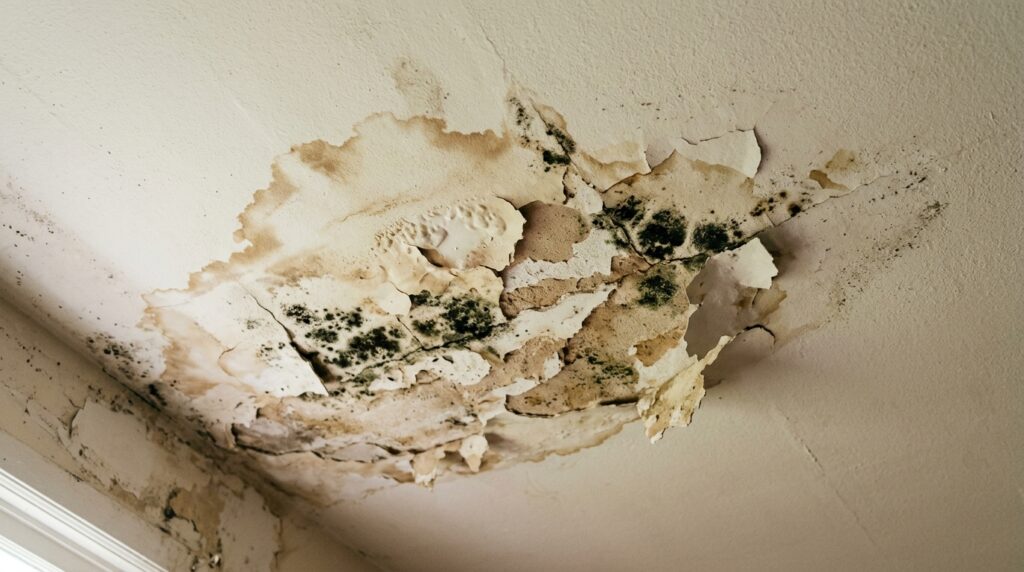
A water stain on the ceiling can make the problem seem obvious: there must be a hole directly above it. Unfortunately, that is rarely how a roof leak detection process works.
Water may first enter at one place in the roofing system, then travel several feet on the underside of the roof sheathing, framework, or insulation, and finally be found inside the home. A ceiling water stain or drip may not be the true location of the leak.
Weather, winds, snow, and freeze-thaw weather can cause imperfections in shingles, flashing, roof penetrations, and other weak spots in the roof, which can be a problem for homeowners in Dayton, Ohio. The act of finding the source is to follow the water’s trail, rather than just seeing where it comes out.
Why the Water Stain May Not Point to the Actual Leak
Before searching for the source, it helps to understand water migration. Once water gets beneath the roofing materials, gravity is only one factor affecting where it goes. It can follow roof decking, rafters, nails, wiring, or insulation before reaching the ceiling below.
Suppose water flows close to a plumbing vent. It can run along the bottom of the roof deck instead of dripping directly down and then wetting the insulation many feet away. The first sign of a problem may then be in another whole room.
This is one reason a hidden roof leak can be difficult to locate without a systematic inspection.
The Direction of the Stain Can Provide a Clue
Examine the ceiling stains for their shape and location. A wet area that appears to be concentrated directly under a roof penetration can indicate a relatively close penetration. If there is a stain that is long or irregular, it may indicate that water was on the journey before it arrived at the ceiling.
However, this is only a starting point. The goal is not to guess where the leak is, but to trace back the possible route that the water has followed.
| Quick Note: A ceiling stain may remain visible long after the surface has dried. If the stain grows, darkens, or becomes damp again after rain, that is a stronger indication of active water intrusion. |
Start the Investigation From Inside
If homeowners ask themselves how to find a roof leak, the safest place to start may be within the home instead of climbing on the roof. The first step is to locate the symptom sites. Look for peeling paint, damp drywall, musty smells, and discoloration on ceilings, walls, attic access points, and any adjoining rooms.
Then consider the conditions under which the problem occurs. Do signs of water show up only after heavy rain? Does it happen when the wind blows from a particular direction? Does the attic show moisture even when there has been no recent rainfall? These factors can help limit the possibilities of what might be causing the problem.
A professional roof leak inspection often begins with this same process: identifying evidence inside before connecting it to possible weaknesses in the roof above.
Common Leak Sources to Check
Given a general area from the interior clues, the next step is to look at the roofing elements above and around the area.
Some parts of a roof are naturally more vulnerable because water flows through them or because they interrupt the continuous surface of the shingles.
| Potential Leak Source | What Can Go Wrong | Common Clue |
| Roof flashing | Loose, corroded, or improperly installed sections | Leaks near walls or chimneys |
| Plumbing vent | Cracked pipe boot or failed seal | Moisture near bathrooms |
| Roof valley | Damaged materials or debris buildup | Leaks during heavy rain |
| Chimney | Failed flashing or masonry-related water entry | Stains near the chimney |
| Asphalt shingles | Cracks, missing sections, or lifted edges | Water after wind or storms |
| Roof penetrations | Failed seals around vents or other openings | Localized attic moisture |
| Gutters | Overflow or water backup | Moisture near roof edges |
This does not mean every roof leak will come from one of these locations, but they are logical places to investigate before assuming the entire roof is failing.
How Professionals Trace a Hidden Roof Leak
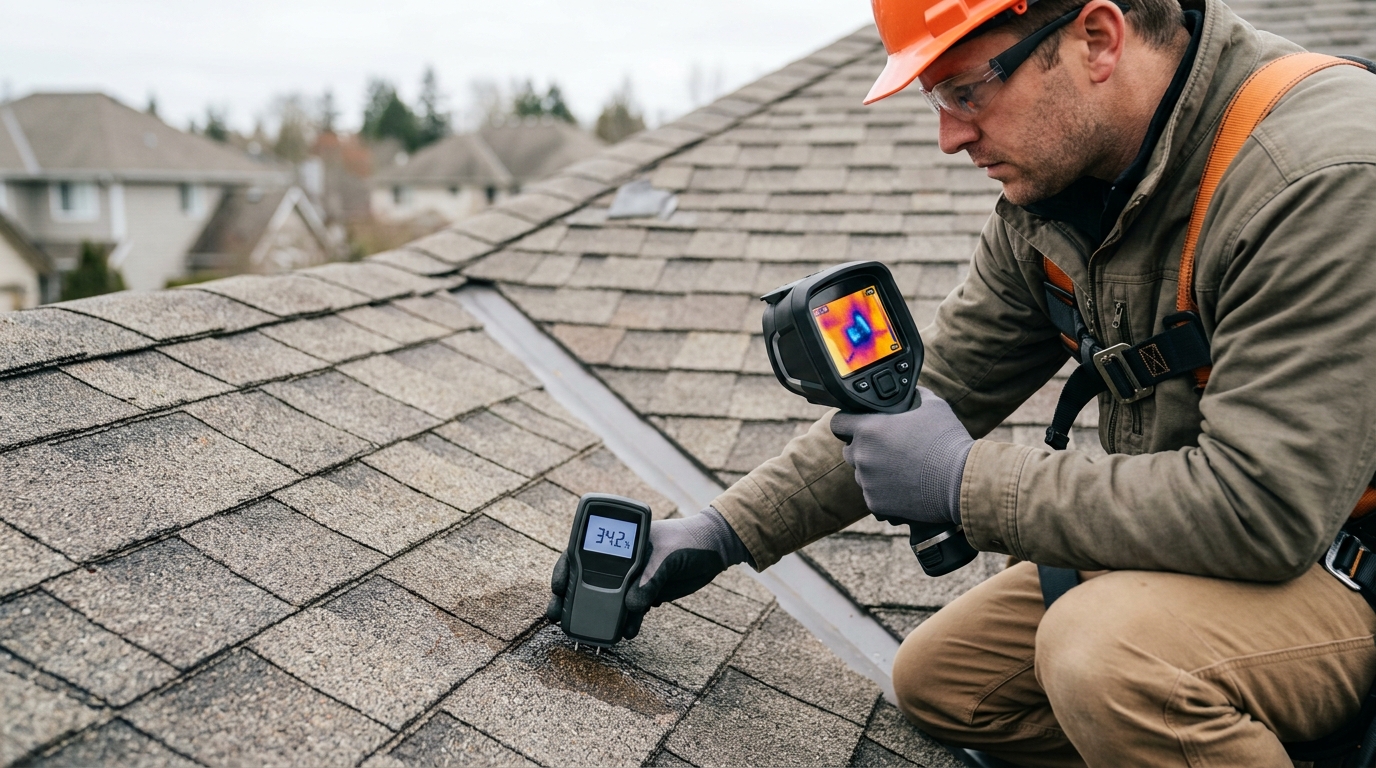
Finding an obvious missing shingle is relatively simple. Tracking down an intermittent leak is more complicated. A professional diagnosis usually involves comparing interior evidence with the roof components above it. This process can involve an attic inspection, shingle inspection, flashing inspection, and a detailed examination of roof penetrations.
The intent is to find a clear association between the interior humidity and a possible water entry point.
Moisture Detection Can Reveal More Than the Eye Can See
Some moisture can remain hidden behind finished surfaces or inside insulation. A moisture meter can indicate if the board is abnormally moist and can pinpoint the extent of moisture in a specific area. This can come in handy if the ceiling is dry, but the homeowner suspects that moisture is still leaking in.
Note that detecting moisture does not necessarily mean that the cause is determined. It indicates moisture, but does not necessarily indicate how this moisture has been deposited into the building.
For homeowners in Dayton who are dealing with recurring stains or unexplained attic moisture, Helping Hands Roofing can inspect the affected area and help trace the roofing issue back to its likely source.

When a Leak Only Happens During Certain Storms
The roof may be totally dry in light rain but leak when it is a heavy, wind-driven storm.
This pattern can provide an important clue. If the water is only showing up when the wind is on one side, it could be due to storm damage, lifted shingles, flashing, or another area where wind can push water sideways under the roofing materials.
Leaks that follow snowfalls or multiple freeze-thaw cycles can also be indications of seasonal roofing leaks. Water can creep through the small hole, freeze, and cause the area to enlarge and erode over time. Keeping a simple record of when the leak occurs can make diagnosis easier. Note the date, weather conditions, location of the water, and whether the stain changes after each event.
Can a Hose Test Help Find the Source?
A controlled water test can sometimes help locate a difficult roof leak, but it should not be treated as a random process of spraying the entire roof. The basic idea is to introduce water gradually to one small section at a time while another person watches inside or in the attic for signs of water entry.
The test should progress from the bottom of the roof to the top. If the flooding is in multiple areas, it may not be possible to know the exact location of the water entry.
A Hose Test Is Not Always the Right DIY Solution
A roof can be slippery, and walking on worn or wet roofing materials is a hazard.
A poorly controlled test can also force water into areas in ways that normal rainfall would not. If the roof is steep, difficult to access, visibly damaged, or the leak source remains unclear, professional diagnosis is the safer option.
| Helpful Note: Never direct large amounts of water at one area all at once. The purpose of a controlled test is to isolate a possible entry point, not to overwhelm the roofing system. |
Is It a Roof Leak or Attic Condensation?
It is not a roof water leak that causes all attic moisture. When warm and moist air comes into contact with a cold surface in an unventilated attic, condensation can occur. This moisture can be visible on the bottom of the roof decking and sometimes even look like a roof leak.
The difference often comes down to the pattern. A roof leak may create localized staining, wet insulation, or a concentrated water trail. The condensation may occur over a larger area and may become more prominent at certain temperatures.
Ventilation, insulation, indoor humidity, and the pattern of moisture all need to be considered before assuming that every wet area means damaged shingles. This is another reason diagnosis matters. Repairing the roof will not solve an attic ventilation problem, and improving ventilation will not repair failed flashing.
Signs That the Leak May Have Been Happening for a While
A single storm can cause immediate water damage, but some leaks develop slowly.
Long-term moisture may leave behind several warning signs:
- Musty odors in the attic or upper rooms
- Repeated ceiling staining in the same location
- Wet attic insulation
- Darkened roof sheathing
- Peeling or bubbling paint
- Visible mold growth
- Soft or deteriorated drywall
A roof leak mold problem is especially important to address because simply drying the visible surface may not remove moisture trapped behind drywall or inside insulation.
The longer the leak persists, the more likely it will damage roofing materials and parts of the building’s interior.
When Should You Stop Searching and Call a Professional?
There is nothing wrong with checking for obvious signs from inside your home or from the ground. However, there comes a point where continued guesswork can waste time and potentially allow more water damage.
Consider scheduling a professional inspection when:
- The leak keeps returning, but the source is not visible.
- Water is entering near electrical fixtures.
- The ceiling is sagging or holding a significant amount of water.
- You suspect damage beneath the shingles or roof decking.
- The roof is steep, slippery, or unsafe to access.
- There are signs of widespread moisture or mold growth.
Instead of just sealing around all the areas you believe entry is coming from, getting a professional diagnosis may be more effective.
What to Do While Waiting for the Leak to Be Repaired
If water is actively entering the home, focus first on limiting additional interior damage.
Put a bucket under the active drips and relocate furniture, electronics, and other items in the space. Take special care and do not touch wet electrical components if water is in the vicinity of electrical wiring or fixtures. Do not assume that covering the visible ceiling stain solves the issue. The source of water entry still needs to be located and repaired.
Emergency roof repair may provide temporary protection to the house, but it does not replace a detailed analysis of the roofing system.
Frequently Asked Questions
Can a roof leak be far away from the ceiling water stain?
Yes. Water can migrate along roof sheathing, framing, insulation, or any other surface before it gets to the ceiling. The surface stain can be located several feet away from the actual water entry point.
How do professionals find a hidden roof leak?
They typically compare interior evidence with the roof area above it. This can involve attic inspection, moisture detection, checking shingles and flashing, inspecting roof penetrations, and using controlled testing when necessary.
How do I tell if attic moisture is condensation or a roof leak?
A localized water trail or wet spot in rain may signal a leak. Temperature and humidity patterns widely connected to vapour might indicate condensation. A proper inspection will identify which condition exists.
Can wet attic insulation mean my roof is leaking?
It can, especially if the insulation is wet directly below a damaged roof component. However, condensation, plumbing leaks, or other moisture sources can also affect attic insulation.
Should you try a hose test to track down a roof leak?
It can sometimes isolate what the point of entry is, if done in a controlled manner and systematically. It is not recommended to spray the entire roof randomly or work on a wet roof.
What happens if I ignore a hidden roof leak?
Continued water intrusion causes insulation breakdown, roof decking and drywall saturation, and framing decay. In addition to this, it can help mold flourish and, over the years, lead a minor repair into a major one.
Final Thoughts
A roof leak can be difficult to locate because the first sign inside your home is often the end of the water’s journey rather than the beginning. Tracking the problem down requires looking at the pattern of moisture, inspecting the attic, checking vulnerable roofing components, and connecting the interior evidence to the possible entry point.
Instead of repeatedly attempting roof repair around the ceiling stain, focus on identifying where the water is actually entering. For Dayton homeowners dealing with a hidden or recurring roof leak, Helping Hands Roofing can help inspect the roofing system, trace the source of the problem, and recommend the appropriate next step.