
Roofing · Greater Dayton
Roof Repair in Dayton, Ohio
We find what failed, then rebuild the whole affected elevation. No spot patches.
Not sure if you need a repair or a replacement?Start here
Roof leak repair starts with finding the cause
A ceiling stain after a storm, a small leak, a few shingles that look loose or missing, water showing up around a vent or a chimney: those are exactly the kinds of things worth having us look at. You don't need to know how serious it is before you call. That's what the free inspection is for.
Sometimes the small thing you noticed is the visible edge of a larger problem. The honest first step is to look at the roof, find out what's actually going on, and tell you plainly what it needs.
Water rarely enters the roof where it shows up inside the house. It travels. A stain over the kitchen can trace back to a failed piece of flashing several feet away, a penetration that was never sealed correctly, a roof-to-wall transition, or wind and hail damage that opened the roof up in a spot you can't see from the ground.
That's the reason we inspect before we quote a fix. Chasing the stain instead of the cause is how a roof gets "repaired" three times and still leaks. When the roof turns out to be storm-related, that same inspection is the start of storm-damage documentation, and we can help you understand the insurance side without ever pretending to decide your claim for you.

Why homeowners choose Helping Hands Roofing
Families Helping Families
-
The Helping Hands Roofing Standard
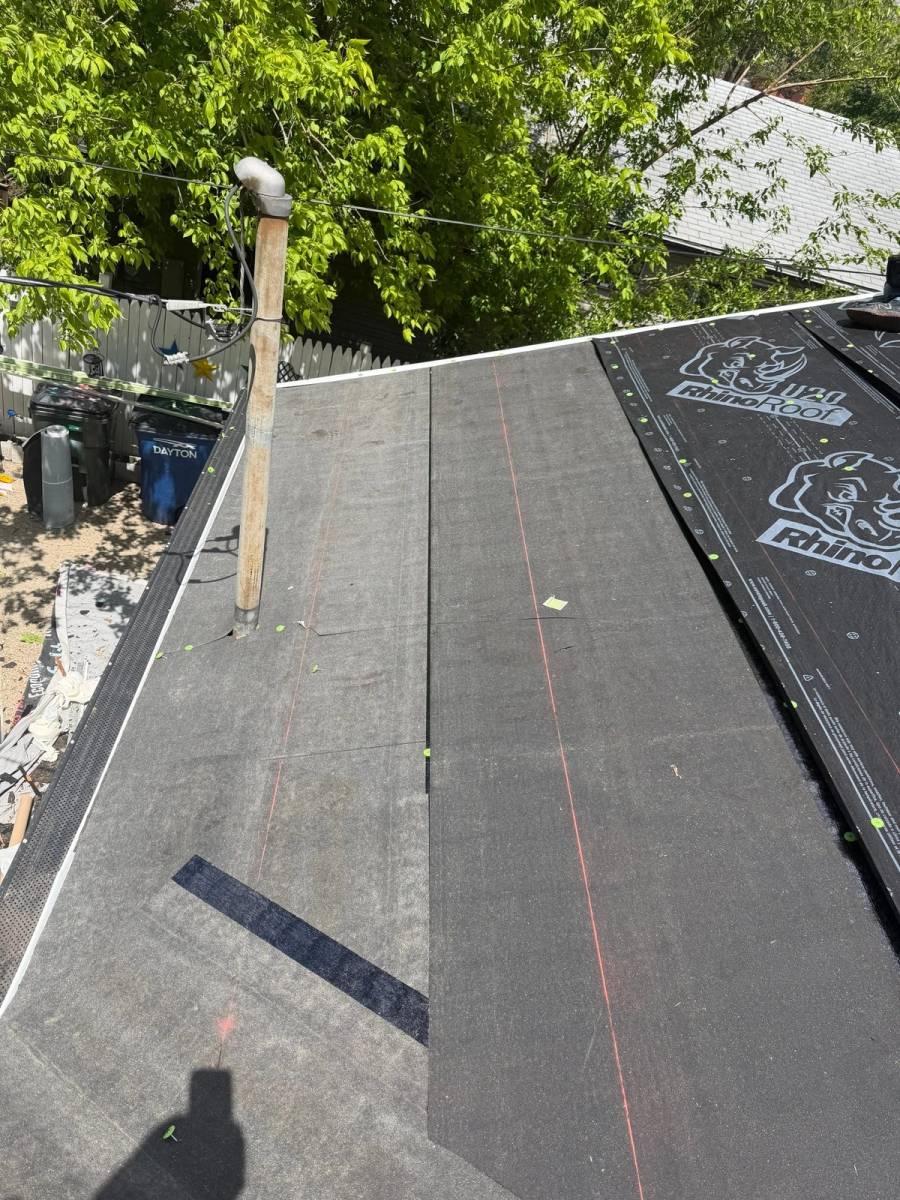
Two rows of ice and water shield at the eaves of every roof, one row in the valleys, along sidewalls and around every pipe and vent, then two layers of synthetic underlayment overlapped 24 inches. More than Ohio code asks for.
Before you sign with any roofer, ask: How many rows of ice and water shield? How many layers of underlayment? What's the overlap?
-
Lifetime Workmanship Warranty
Covers our workmanship on qualifying installations and replacements. See what it covers.
-
Documented Before It's Covered
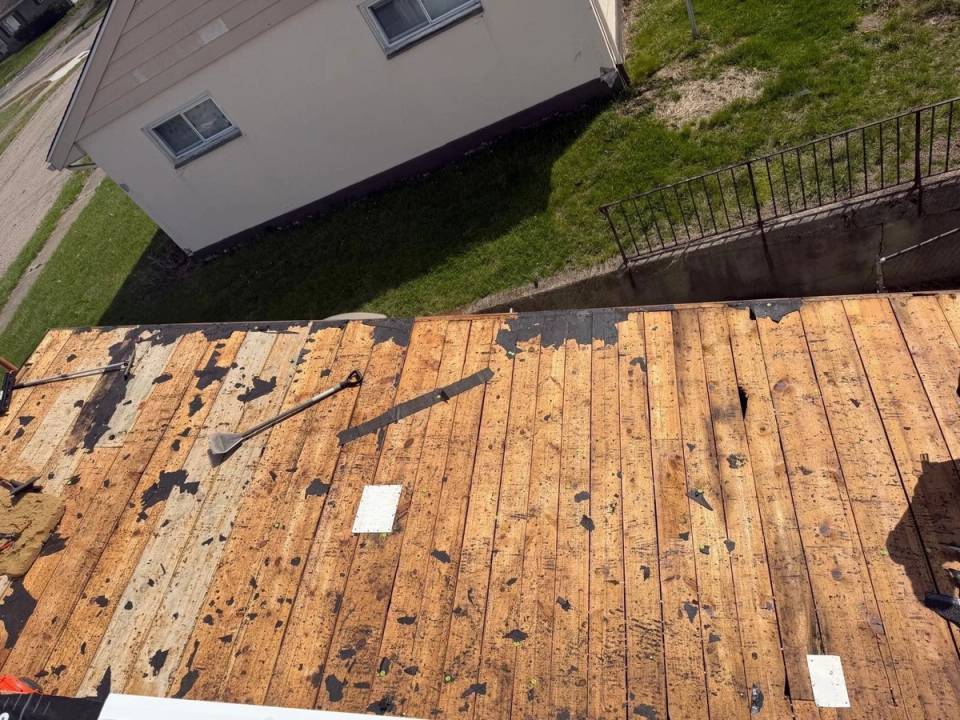
We photograph the bare deck after tear-off, the underlayment before the shingles go on, and the finished roof. If we find rotted wood, we photograph that too.
-
Fully Insured Since 2016
Aub Holley founded Helping Hands Roofing in 2016. We're fully insured and based in Beavercreek.
How we actually repair a roof
How we repair a roof: the whole elevation, not a patch
We do not do spot patches. When a roof needs a repair, we rebuild the whole affected elevation as a complete roofing system, so the thing that caused the leak is corrected, not covered back up. Most repairs are done in a day, often in half a day.
-
We take the roofing off the affected elevation
Rather than addressing only the visible point of failure, we remove the roofing on the affected elevation so we can see what actually failed and why.
-
We check the deck underneath
With the elevation open, the decking gets looked at directly. Solid, properly-sheathed decking stays; anything soft, rotted, or unsuitable is corrected before a new roofing system goes over it, because new roofing is only as sound as what it's fastened to.
-
We add water protection where roofs actually fail
Roofs leak at transitions, not usually in the open field. We add ice-and-water protection at penetrations, at roof-to-wall transitions, and at the other spots we identify as having a higher chance of water intrusion, so the vulnerable areas are protected, not just re-covered.
-
We use our own underlayment approach
Across the affected elevation we install two layers of synthetic underlayment with a 24-inch overlap.
-
We rebuild the elevation as a complete system
The elevation goes back together as a complete roofing system, not a patch hiding an unresolved problem. When we're done, the part of the roof we touched is rebuilt correctly, from the deck up.
How much does roof repair cost in Dayton?
Most roof repairs in the Dayton area cost between $750 and $2,000. We rebuild the whole elevation, so your price depends on the size of that elevation and what we find under the shingles. If you need an estimate, we write one after the free inspection and send it to you.
An honest answer
Roof repair or replacement?
We don't decide that from the symptom. Some roofs have one elevation that took the damage while the rest of the system is still sound, and in that case rebuilding the affected elevation is the responsible, cost-effective answer, no full replacement needed.
Other roofs have reached a point where rebuilding one section wouldn't be doing you a favor, because the overall system is worn out or damaged widely enough that the honest recommendation is a full roof replacement. We inspect the roofing system, find what's actually failing, and explain the options, including the ones that cost you less. Educating you before selling you anything is the whole point.
The Helping Hands Roofing Standard in practice
Respect the homeowner's decision
Not every roof problem is a replacement. Part of respecting the homeowner's decision is telling you plainly when a repair will genuinely solve the problem, and when it won't, and why.
Rebuilding an elevation the right way costs more than a patch, and we'd rather explain why it lasts than sell you the cheaper thing that doesn't. It's the way we'd want it handled on our own family's home, which is the whole idea behind Families Helping Families.
A rebuilt elevation carries the Lifetime Workmanship Warranty
A complete-elevation rebuild performed by Helping Hands Roofing is covered by our Lifetime Workmanship Warranty for our workmanship on that elevation, subject to the warranty's terms, maintenance requirements, and exclusions.
That coverage is for our workmanship on the elevation we rebuilt. It doesn't automatically extend to parts of the roof we didn't touch, and it isn't a warranty against weather or against manufacturer and material defects. We do not do spot patches.

- The Helping Hands Roofing Standard
- Lifetime Workmanship Warranty
- Fully insured
- Founded 2016
- FAA Part 107 remote pilot
Questions about roof repair in Dayton
How much does roof repair cost in Dayton?
Most roof repairs in the Dayton area cost between $750 and $2,000. We rebuild the whole elevation, so your price depends on the size of that elevation and what we find under the shingles. If you need an estimate, we write one after the free inspection and send it to you.
Can you repair just part of a roof?
Yes. When one elevation took the damage and the rest of the roof is sound, we rebuild that whole elevation. We do not do spot patches.
Should I repair or replace my roof?
It depends on the rest of the roof. If one elevation is damaged and the rest is sound, rebuilding that elevation is the answer. If the whole roof is worn out, we will tell you a replacement is the honest call. Start with a free roof inspection.
How long does a roof repair take?
Most repairs are done in a day, often in half a day.
Does homeowners insurance cover roof leaks?
Policies generally cover sudden storm damage: wind, hail, a fallen limb. They generally do not cover age, wear or improper installation. What your insurance company pays is its decision. See roof insurance claim help.
Do you do emergency roof repair?
If water is coming in, we install an emergency tarp to stop further damage. The repair follows once the roof has been inspected. See emergency roof tarping.
Is a roof repair covered by a warranty?
Yes. A rebuilt elevation carries our Lifetime Workmanship Warranty on our workmanship for that elevation, under the warranty's terms.
How it works
- Step 1
Inspect and document
A free inspection finds where the water is getting in and how far the damage goes.
- Step 2
Recommend honestly
We tell you whether a repair will hold or the roof needs more, and you get the price before any work starts.
- Step 3
Rebuild the whole elevation
We rebuild the whole affected side of the roof, never a patch, usually in half a day to a day.
Related reading
What Dayton homeowners say
-
Kara Aub and his team did a great job with our new roof install. He made sure we were set for the winter and then installed as soon as possible in the spring for best results. Helping Hands also worked directly with our insurance, which was a huge help!
Google review
-
Amanda I would absolutely recommend Helping Hands to anyone. They did a great job replacing my roof and downspouts. I appreciate the amount of work that they put into helping me with my insurance company and how much they cared about me. They helped with things I'm quite sure other companies wouldn't have cared about. In the end, when my insurance company wouldn't budge, they made sure I was taken care of. Thank you for everything.
Google review
-
Rob I highly recommend Aub and the team at Helping Hands Roofing! They replaced my roof five years ago, and we had a fantastic experience. Recently, after experiencing storm damage, Aub and his crew came out quickly to make the repairs. We ran into a few unexpected obstacles both times, but Aub's fast and clear communication made resolving them a breeze. If you’re looking for a local, honest, and family-oriented company, definitely give them a call for your next roofing project.
Google review
Not sure how serious it is?
Start with a Free Roof Inspection. We'll look at the roof, find the actual cause, and explain what it needs, with no obligation.