
The operating philosophy
The Helping Hands Roofing Standard
Building code sets the minimum a roof has to meet. Craftsmanship begins after that minimum is already met, in the decisions nobody but the crew ever sees.
"I build every roof the way I would build it on my own home." Aub Holley, Owner
Pillar One
Respect the Homeowner
The homeowner experience is as important as the roof itself.
- Always arrive early.
- Respect the homeowner's time.
- Respect the homeowner's property.
- Educate before recommending.
- Communicate honestly.
- Leave the property cleaner than it was found.
Pillar Two
Build the System Correctly
A roof is a complete system: decking, underlayment, flashing, roof-to-wall transitions, penetrations, and ventilation all working together to manage water and hold up to Ohio weather. The hidden portions of that system often determine how long the roof actually lasts, more than anything visible from the street.
Building code establishes the minimum acceptable standard. Where exceeding it provides real, meaningful long-term value, that's the standard applied, not the minimum that passes inspection.
See it applied
- How Long Does a Roof Last in Ohio?
- How Long Does It Take to Replace a Roof?
- The Layers of a Roof, From the Deck Up
- Gutter Apron vs Drip Edge: What Is the Difference?
- Can Gutter Guards Be Installed on Existing Gutters?
- Attic Ventilation: How It Works and What Ohio Code Requires
- How to Compare Roofing Estimates Beyond Price
- Why Is My Roof Leaking? Start With the Pipes, Chimney and Vents
- Are Gutter Guards Worth It? What They Do and Where They Fail
- Soffit vs Fascia: What Each One Does at the Roof Edge
Pillar Three
Stand Behind the Work
The interests of the homeowner, the installer, and the company are aligned: everyone benefits when the roof is built correctly and lasts. The Lifetime Workmanship Warranty is the natural result of that alignment, not a marketing add-on, and the quality-control documentation captured on every applicable job is the evidence that this pillar is real, not just asserted.
See it applied

From the field
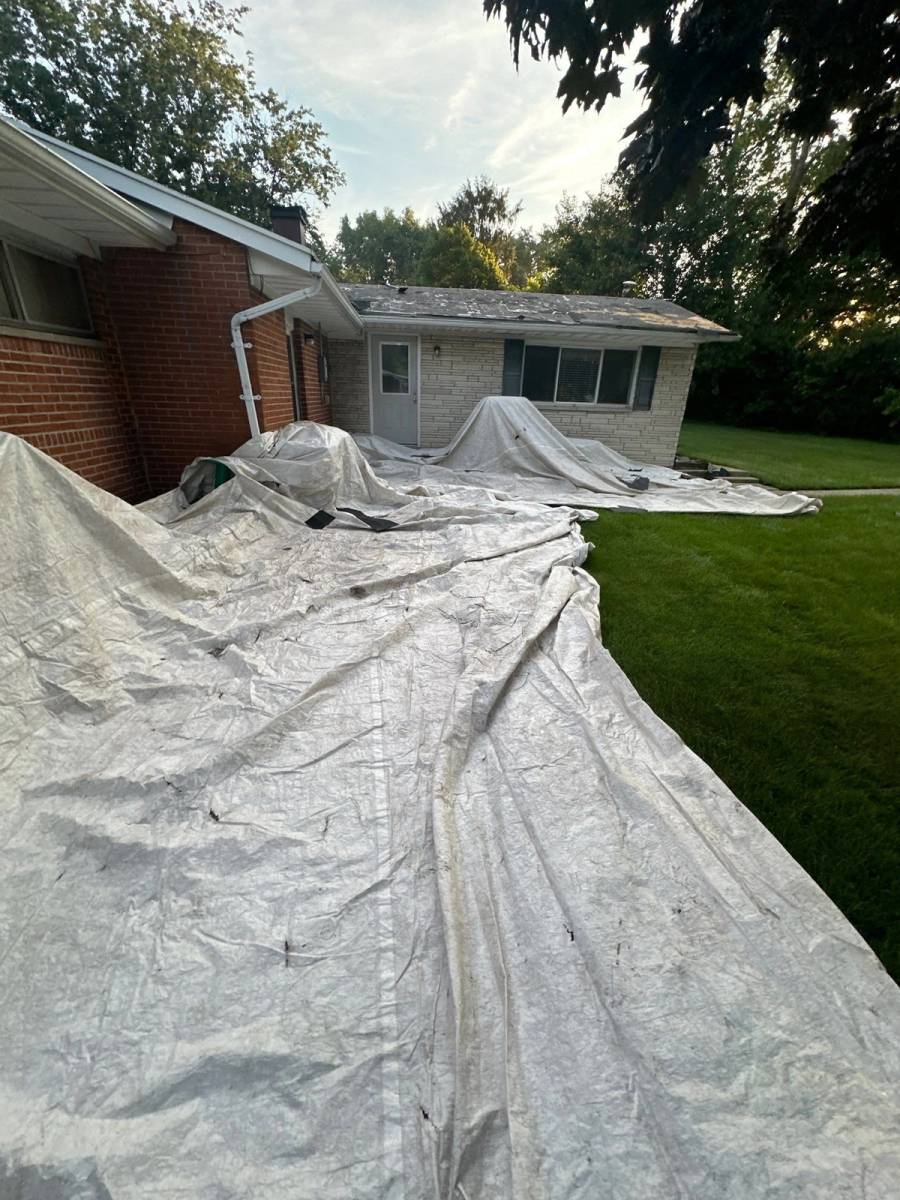
Protecting the property. "Ground tarps catch tear-off debris and keep nails out of flower beds as much as possible. We run heavy-duty magnets across the property to pull loose nails, then hand-pick the remaining debris the tarps did not catch before we turn the job over. The goal is to leave the property cleaner than we found it."
Two layers of underlayment. "We put down two layers of synthetic underlayment. It comes on a four foot roll and we overlap twenty four inches everywhere, courses and end laps alike. Every course covers half the one below it, which means every square foot of that deck carries two layers rather than one. It is not a marketing term for doing it the normal way."
Three documented checkpoints on every roof
We photograph every roof at three points. That record is the reason we can stand behind the work: if something ever needs looking at, nobody is relying on memory.
Checkpoint One
After tear-off
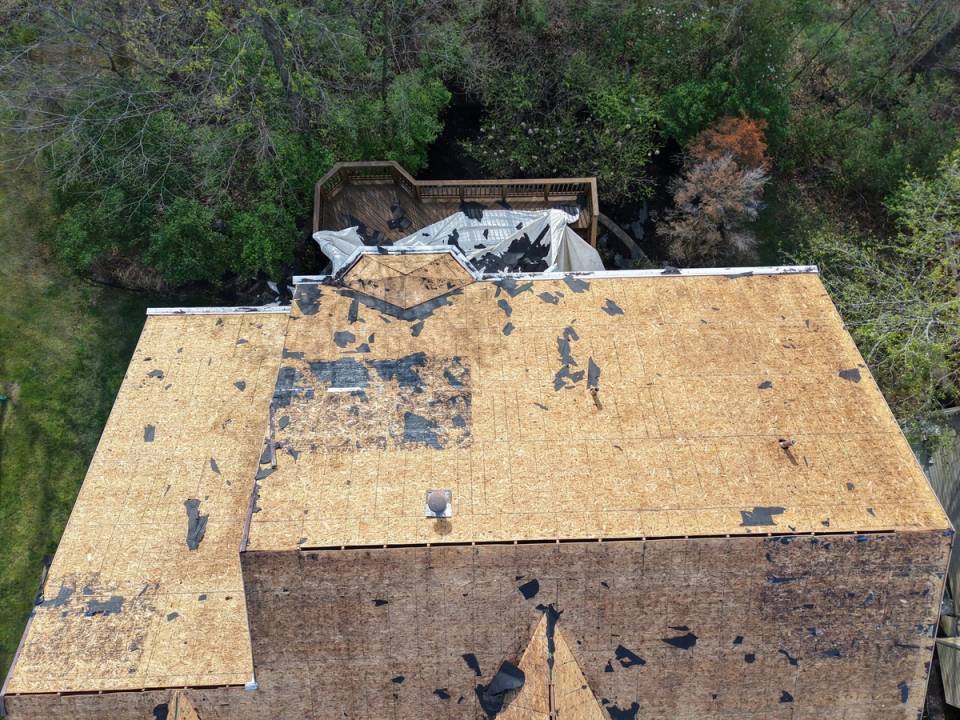
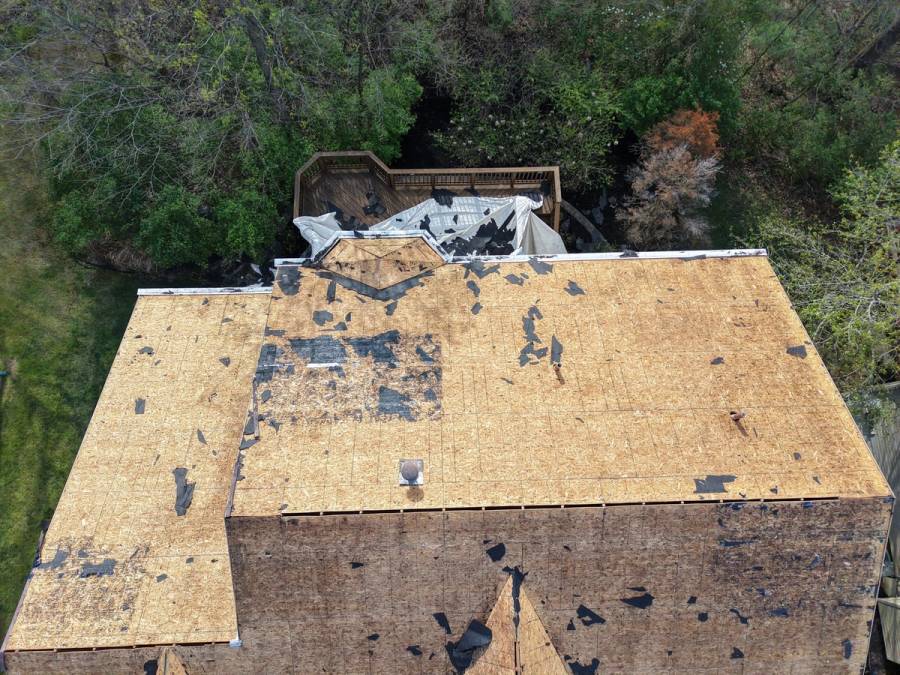
Every shingle and all the debris comes off first. Then the decking is inspected properly, board by board: gaps wider than a quarter inch, delaminated plywood, and rot. Owens Corning's own installation instructions allow a maximum quarter-inch gap between deck boards, and wider than that the boards have to be repaired or replaced. Rot we find is photographed before it's replaced. What we are confirming is that the decking is a solid nailable surface the new roofing system will fasten to and hold to. The entire deck is photographed before any underlayment goes on.
Checkpoint Two
After underlayment
Ice and water shield is not installed to a minimum. It goes in two rows at the eaves, one row in every valley, around every protrusion, up sidewalls and at the roof-to-wall flashings: anywhere with real failure potential. Rolls are not cut down to land exactly on a code figure, so the coverage runs to where the material covers, which is generally past the line.
Then two layers of synthetic underlayment, overlapped twenty-four inches everywhere. Once all the underlayment is on we go over it again, checking the overlaps and the cap nails, and photograph the underlayment: the ice and water shield and the synthetic underlayment both.
Then the installation. The roof is measured off so the courses run straight and chalk lines are snapped. Then starter course, field shingles, ridge vent, hip and ridge cap.
Checkpoint Three
At completion
A final inspection and photographic documentation of the entire roof, confirming it was installed properly and to The Helping Hands Roofing Standard.
What Helping Hands Roofing competes on
| Doesn't compete on | Competes on |
|---|---|
| Being the oldest company in the market | Integrity: doing what was said, every time |
| Manufacturer certifications and badges | Education: homeowners understand what they're buying |
| Flashy marketing | Craftsmanship: building systems, not installing shingles |
| Exaggerated claims | Documented quality control: evidence, not assertion |
| Honest recommendations: never selling unneeded work | |
| Long-term thinking: built the way the owner would build his own roof |
Before you sign with any roofer, ask: How many rows of ice and water shield will you install? How many layers of underlayment? What's the overlap?
- The Helping Hands Roofing Standard
- Lifetime Workmanship Warranty
- Fully insured
- Founded 2016
- FAA Part 107 remote pilot
What Dayton homeowners say
-
Lee Helping Hands Roofing did an outstanding job on our new roof! From start to finish, the entire process was smooth and stress-free. We needed a roof replacement due to storm damage, and they made the insurance claim process incredibly easy. They worked directly with our insurance company, handled all the documentation, and made sure everything was approved properly. That took a huge weight off our shoulders. Communication was clear and consistent the whole way through. The crew showed up on time, worked efficiently, and kept the job site clean every day. The quality of the workmanship is top-notch, and you can tell they take pride in what they do. If you’re looking for a reliable Dayton roofing company that knows how to handle insurance claim roof replacements, I highly recommend Helping Hands Roofing. Our new roof looks amazing, and we couldn’t be happier with the results!
Google review
-
Tim We recently had our roof replaced and couldn’t be happier with the experience. The pricing was very fair and competitive, which immediately set them apart There were no hidden charges or upsells, I paid exactly what I was expecting. Aub was incredibly helpful throughout the entire process—always quick to respond to any questions and made everything easy to understand. The crew did an excellent job on the installation, and cleanup. They left the area spotless, which we really appreciated. Overall, a smooth, professional experience from start to finish. Highly recommend!
Google review
-
Amanda I would absolutely recommend Helping Hands to anyone. They did a great job replacing my roof and downspouts. I appreciate the amount of work that they put into helping me with my insurance company and how much they cared about me. They helped with things I'm quite sure other companies wouldn't have cared about. In the end, when my insurance company wouldn't budge, they made sure I was taken care of. Thank you for everything.
Google review