
How do I know if my roof has storm damage?
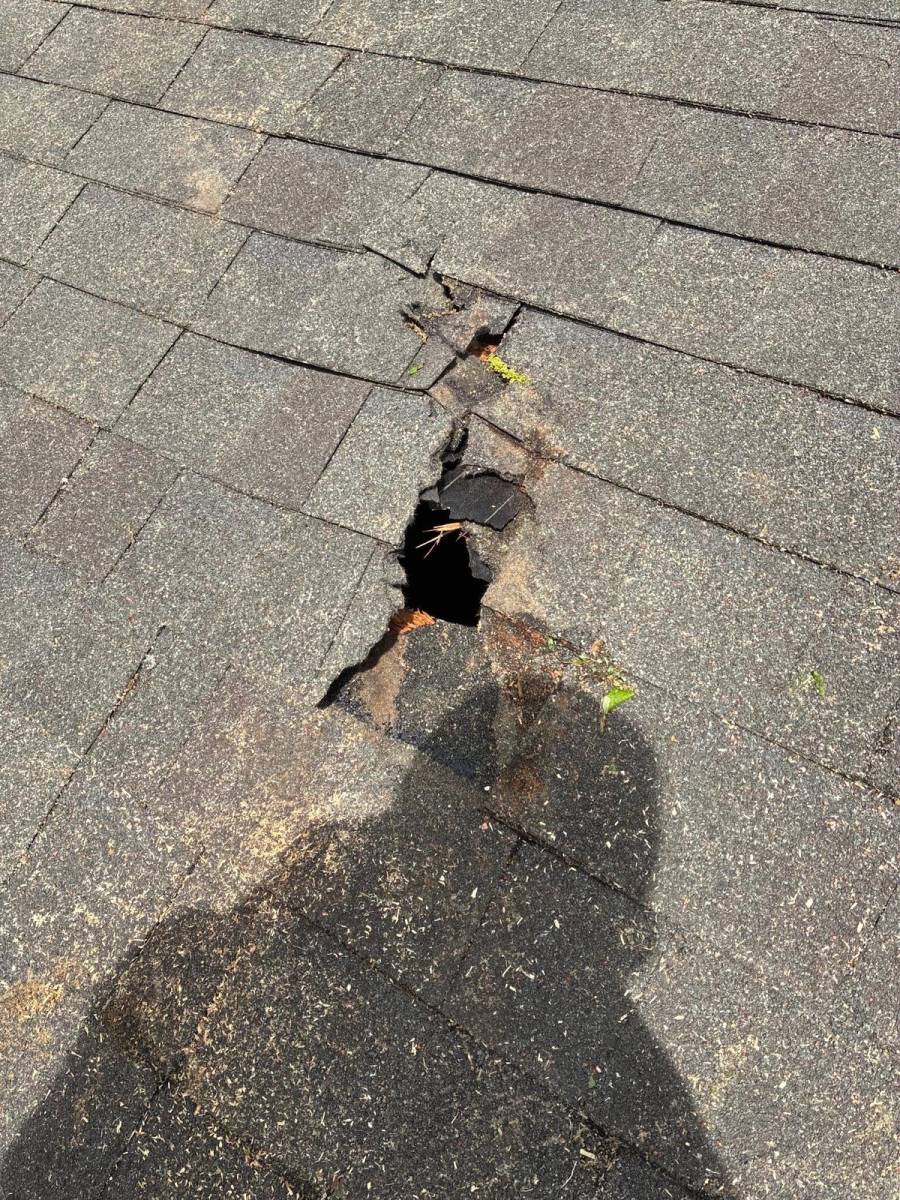
Wind and hail damage is often not visible from the ground. What shows up on the roof itself:
- Lifted or creased shingles
- Hail bruising that fractures the shingle mat
- Damaged flashing
- Displaced ridge cap
A roof that looks fine from the driveway doesn't rule out storm damage. Most of what matters is on the roof, not in the yard.
Hail big enough to damage a roof isn't common around Dayton, but it happens. Small, pea size hail doesn't really damage shingles.
What to do after a storm
Note the date of the storm and anything you can see:
- Debris in the yard
- Shingle granules collecting at the base of downspouts or in the gutters
- Damaged fascia
- Interior signs, including a fresh ceiling stain
If it's safe, take photos from the ground. Don't climb up. A wet or steep roof is dangerous, and a professional inspection is both safer and far more thorough.
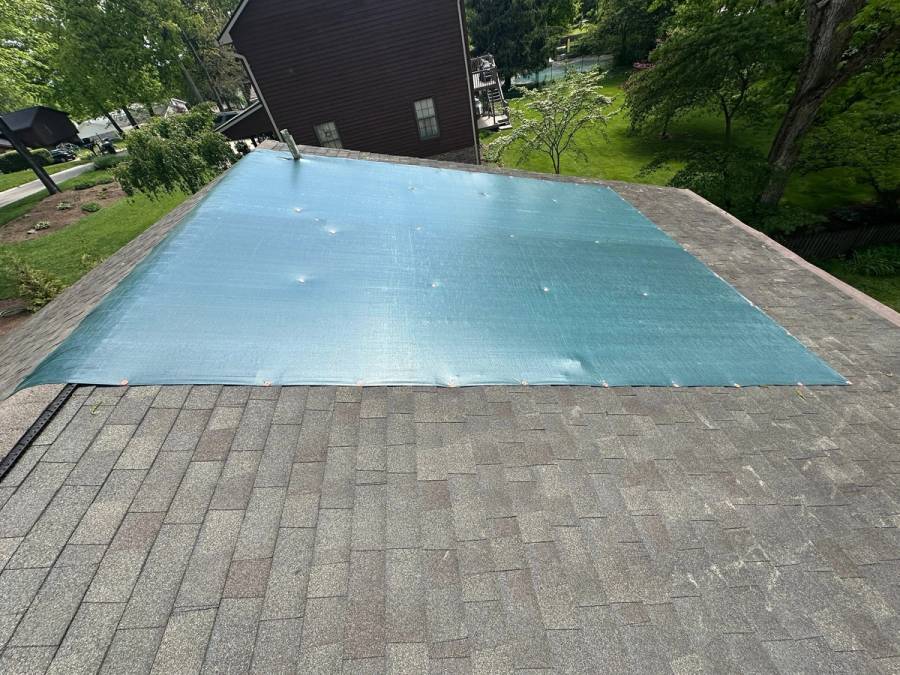
If damage is letting water in, the roof needs temporary protection before anything else happens. Emergency tarping buys the time a claim takes.
Before you open a claim
Helping Hands Roofing can be your first look, before you open a claim and have it on your record. If a storm did not cause damage your policy covers, it is better to know that before you file than after.
What we do:
- Inspect the roof
- Document what damage exists, with photographs
- Explain what we find in plain terms
- Check your insurance company's estimate against our own measurements
- Meet your insurance adjuster at your home
What we do not do:
We do not act as a public adjuster or an attorney, and we do not decide what your policy covers. Coverage is decided by your insurance company under the terms of your policy. Our job is to document the roof accurately, and to build the work correctly if a claim is approved.
What a proper storm inspection covers
The whole system, not just the shingles:
- Shingle field
- Flashings at walls and penetrations
- Vents
- Gutters
- Roof edges
Some of it we cover by drone, which lets us photograph the roof close up without walking it. Some of it requires physically getting on the roof and looking. The goal is to determine whether damage is genuinely storm related, and to document it clearly so the condition of the roof is accurately reflected.
What the insurance company does
Your insurance company assigns an adjuster to evaluate the claim and determine what, if anything, is covered. It's often useful for the roofer and the adjuster to look at the same roof together, so the documentation is based on the same observations. The adjuster, not the contractor, makes the coverage decision.
A claim can take anywhere from two weeks to six months, depending on the insurance company.
One Ohio rule worth knowing about
Ohio sets minimum standards for how property and casualty claims are handled. One of them addresses matching. Where a fire and extended coverage policy settles losses on a replacement cost basis, and replacing a damaged item would not match the quality, color or size of what was there, the rule says the insurer replaces as much of the item as results in a reasonably comparable appearance.
In plain terms, it speaks to whether a few replacement shingles that do not match the rest of the roof are an acceptable outcome.
Three things to be clear about. It applies to fire and extended coverage policies settling first party losses on a replacement cost basis, not to every policy. It sets a minimum standard rather than guaranteeing a particular result, and its own words are "as much of the item as to result in a reasonably comparable appearance", which does not by itself say how much of a roof that means. And the rule states plainly that nothing in it creates or implies a private cause of action.
We are not telling you what your policy covers or what your insurer will decide. This is a rule worth knowing exists so you can ask your insurer how it applies to your claim.
Worth checking separately: many Ohio policies now carry a wind and hail deductible that is separate from the standard deductible. Your declarations page will say.
If a claim is approved
Restoration means returning the roof toward its pre-storm condition, built correctly to The Helping Hands Roofing Standard rather than just quickly.
The same standard that governs any replacement applies. The deck, underlayment, flashing and ventilation are inspected and corrected as part of the work, and the deck and underlayment are photographed before they're covered.
What people get wrong
Storm damage frequently isn't visible from the ground, so a roof that looks fine isn't proof there's no damage. It takes either close detail photography or someone physically on the roof.
A roofing contractor cannot approve or deny a claim. And a workmanship warranty from the installer and a coverage decision from your insurer are entirely separate things. Understanding those distinctions early tends to make the whole process less stressful.