
Can I get my insurance company to pay for a new roof?
Yes, when a covered event damaged the roof and the damage is documented. A homeowners policy pays for sudden damage from a covered peril: wind, hail, a fallen limb or another event your policy names. It does not pay for a roof that is simply old, worn out, poorly maintained or improperly installed.
Nobody can make an insurance company pay, and no roofer can promise an approval. Your insurer decides, under the terms of your policy. What you control is the evidence: the date of the storm, what it damaged, and clear photos of that damage.
We've helped homeowners through several hundred claims around Dayton. The ones that go smoothest start the same way: the roof is inspected and documented before the claim is opened.
What qualifies a roof to be covered by insurance?
Three things have to be true.
- A covered peril caused the damage. Wind, hail and fallen limbs are covered events on most policies. Age, wear and poor installation are not.
- The damage is real, and it's on the roof. Wind creases and lifts shingles. Hail bruises them, and it dents soft metals like gutters and roof vents first. Much of this can't be seen from the ground. Here's how to spot storm damage on your roof.
- You report it in time. Every policy sets its own deadline for reporting a loss. Check yours, and don't wait on a storm you suspect did damage.
Will insurance pay for a 20-year-old roof?
It can. A 20-year-old roof with real storm damage and the right documentation can still be paid for. Age alone doesn't make a claim, and age alone doesn't always end one.
What age often changes is how much you're paid. Some policies pay older roofs on actual cash value, which subtracts depreciation. The Texas Department of Insurance (opens in a new tab) puts it plainly: "As roofs age, some companies will switch to actual cash value." Policies vary by insurer, so your declarations page is where to check how your roof is covered.
If an older roof has no storm damage, it isn't an insurance claim. We'll tell you that plainly and give you a price to replace it without one.
Read your declarations page before you file
The declarations page, usually the first page of your policy, answers three questions that decide what you're paid.
- Replacement cost or actual cash value? Replacement cost pays to replace the roof without subtracting depreciation. Actual cash value pays the roof's depreciated value. The NAIC (opens in a new tab)'s own example: $15,000 of roof damage with a $1,000 deductible pays $14,000 on replacement cost, but $4,000 on actual cash value after $10,000 of depreciation.
- What is your wind and hail deductible? Many Ohio policies carry one that is separate from the standard deductible.
- Do you have ordinance and law coverage? It pays for building code items your roof never had, such as ice and water shield at the eaves. Without it, those items can come out of your pocket on top of the deductible. It is typically 10% of the amount your home is insured for, and it's usually an inexpensive endorsement to add. Add it before you need it: coverage added after a storm doesn't apply to that storm.
Not sure what yours says? Email your declarations page to us at aub@hhrdayton.com and we'll do our best to tell you. We're not an insurance agent or an adjuster, so your agent has the final word.
The steps, in order
- Write down the storm date and what you saw: shingles in the yard, granules in the gutters, a new ceiling stain.
- Have the roof inspected before you file. We check the entire property from the ground, then the whole roof, and photograph everything we find. Our inspection is free.
- If water is coming in, protect the home first. We install emergency tarps to mitigate any further loss while the claim is worked.
- Report the damage to your insurance company or agent, with the storm date and what you've seen. We help you put that together.
- Have your roofer at the adjuster's inspection. We meet the adjuster at your home and show them everything we found.
- Read the insurer's estimate line by line. The adjuster writes the estimate. We check it against our measurements, and when something is left off, we prepare a supplement and follow up with your insurer until it's resolved. We work to get every item approved before the work starts, because once a roof is finished, insurers are much harder to move on a supplement.
- Build once the claim is funded. You pay your deductible, and work usually starts within a week or two of the project going on the schedule.
A claim can take anywhere from two weeks to six months, depending on the insurance company. Here's how we help with your claim.
What our claims looked like, job by job
Every job below is on our site with our own photos.
- A repair first, then a full roof: Riverwood Trl; Prudence Dr, Beavercreek.
- No matching material left, so the insurer covered new: Garianne Dr, Dayton (new house and shed roofs after an ITEL test); Red Rock Dr, Beavercreek (new siding instead of paint).
- Another company passed on the claim, and the insurer covered the roof: Oak Trace, Beavercreek.
- Tarped first, then replaced: Viola Dr, Beavercreek; Ridge View Ct, Xenia.
- A tree through the roof: Stauffer Dr, Beavercreek. The insurer covered the roof, gutters, gutter guards and the interior.
- Hail: Sutton Ave, Kettering.
- We met the adjuster, and the insurer covered a full roof: Runnymeade Way, Xenia; Napanee Dr, Beavercreek; Dragonwyck Ct, Xenia; Kling Dr, Dayton; Spaulding Rd, Dayton; Cornerstone Trail, Yellow Springs; River Hills Rd, Beavercreek.
- Roof and siding on the same claim: Turnbull Rd, Beavercreek. Siding only: Somerset Dr and Fullerton Ct, Beavercreek.
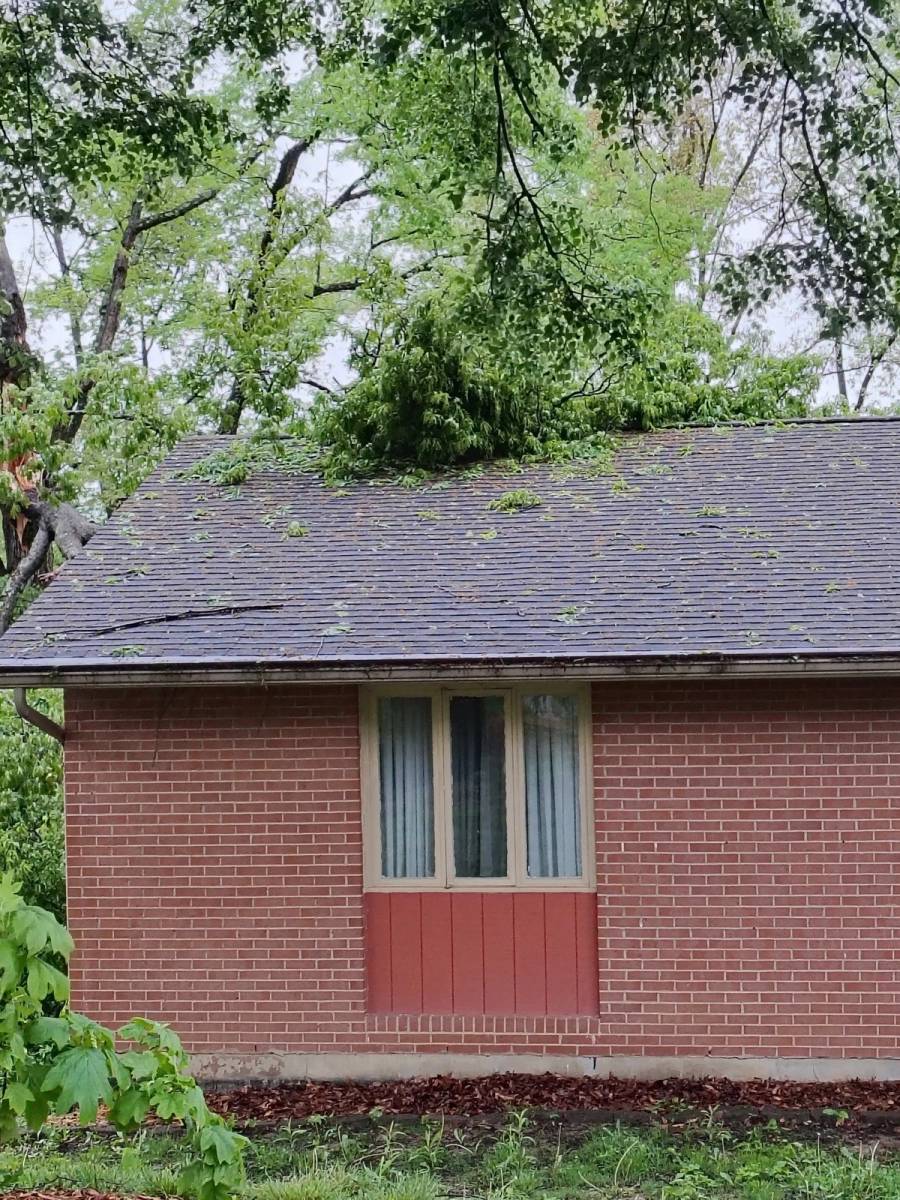
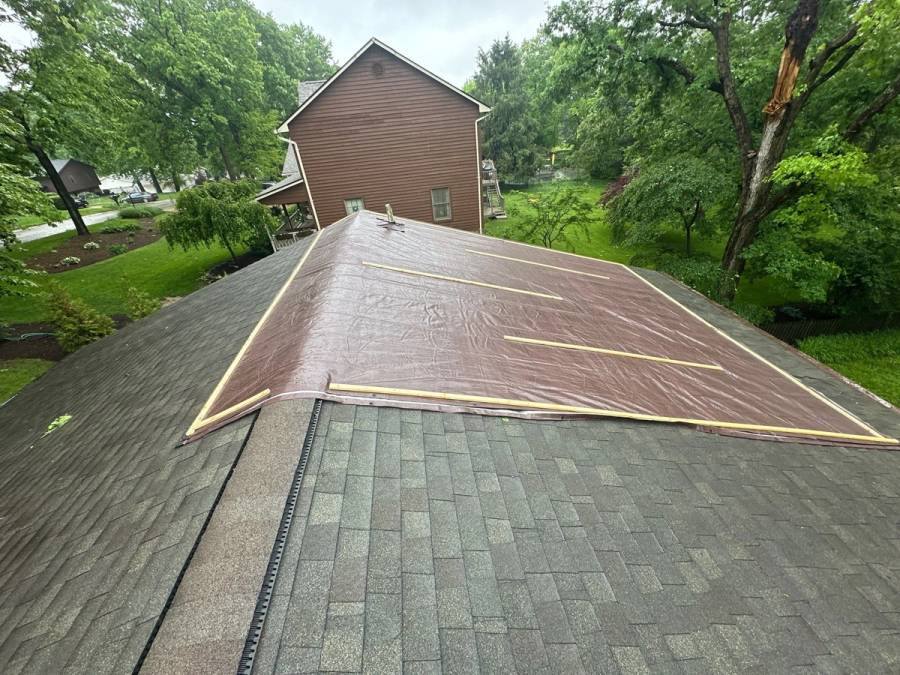
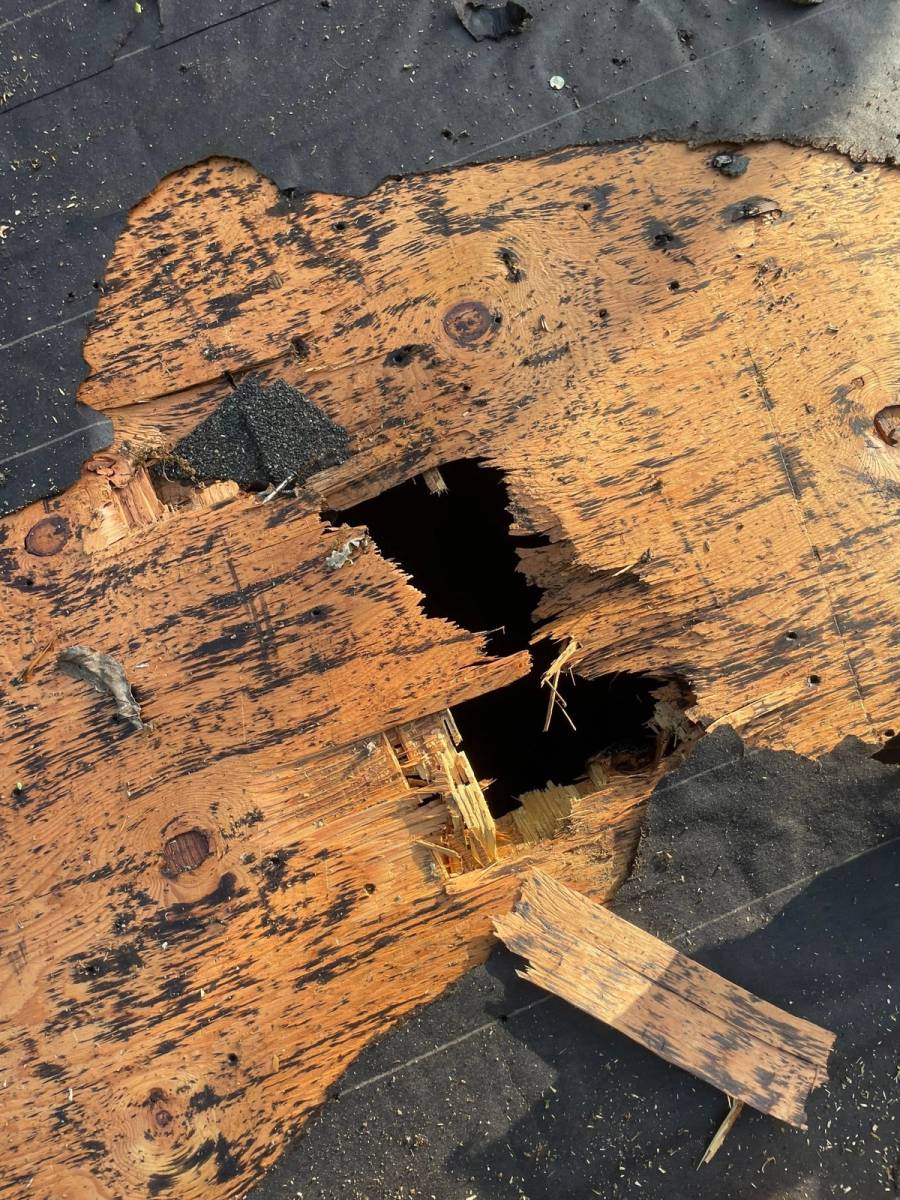
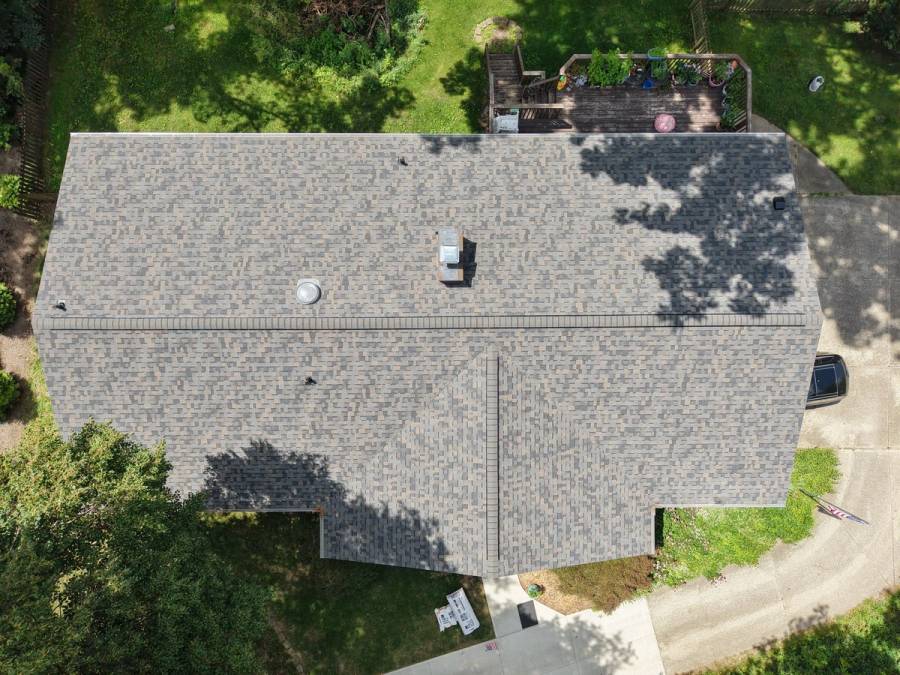
Our drone photos are taken by FAA Part 107 certified drone pilots.
What insurers leave off most often
Our claim emails go back to 2016. The items our team adds most often, when a first estimate leaves them off:
- Decking that isn't a solid, nailable surface
- Step, chimney and wall flashing
- Ice and water shield, which the Residential Code of Ohio requires at the eaves across the whole state
- Overhead and profit, when a job needs more than one trade
- Drip edge and gutter apron
- Ridge cap and starter shingles, which Owens Corning makes for those spots
We send the code section or the manufacturer's instructions with each item, and follow up until the insurer answers. Some items are still denied; the decision is always the insurer's.
What the emails also show: when an insurer asks for a repair with its own matched shingle first, photographing that repair is often what leads to a full roof. That's what happened on Prudence Dr and Riverwood Trl.
How fast does an Ohio insurer have to answer?
Ohio sets deadlines for how insurers handle claims, in Ohio Administrative Code Rule 3901-1-54. In plain terms:
- 15 days to acknowledge your claim after you report it.
- 21 days after receiving your proof of loss to accept or deny it. If it needs more time, it has to tell you in writing why, and update you at least every 45 days.
- 10 days to pay once it accepts a claim and the amount is agreed.
- A denial has to name the part of the policy it rests on.
These are minimum standards for how a claim is handled, not a promise of what your claim pays.
Why does insurance pay in two checks?
On a replacement cost policy, the first check is usually the roof's depreciated value, less your deductible. The rest, the recoverable depreciation, is released after the work is done. When the roof is finished, we give you our final invoice, which is what insurers ask for to release that second payment. Insurers set their own deadline for finishing the work and claiming it, so check yours; the ones in our files range from six months to 18 months after the first check.
In Ohio, when your insurer pays actual cash value, it has to show you every depreciation deduction if you ask. Rule 3901-1-54 (opens in a new tab) says the insurer "shall provide documentation detailing all depreciation deductions" on the insured's request.
Your deductible is yours to pay, every time. We never waive it.
What if the new shingles won't match the old ones?
Ohio's claim rules include a matching standard. When a replacement doesn't match the quality, color or size of what was damaged, the insurer replaces as much as it takes for a reasonably comparable appearance. The rule doesn't say how much of a roof that means. Here's the matching rule, explained.
Four of our own jobs show how it plays out:
- [Riverwood Trl](/projects/wind-damage-roof-replacement-insurance-claim/): the insurer first covered a repair. The new shingles didn't come close to matching, so we sent the photos and documentation, and the insurer then covered a full roof replacement.
- [Garianne Dr](/projects/wind-damage-roof-and-shed-roof-replacement-dayton-ohio/), Dayton: wind creased the shingles. An ITEL test found no matching shingle, and the insurance company covered new house and shed roofs.
- [Prudence Dr](/projects/wind-damage-roof-and-decking-replacement-beavercreek-ohio/), Beavercreek: after a repair, the insurance company covered replacing the whole roof, with the damaged decking replaced.
- [Red Rock Dr](/projects/wind-damage-siding-replacement-beavercreek-ohio/), Beavercreek: an ITEL test found no matching siding still being made, so the insurance company covered new siding instead of paint.
What if my claim is denied?
Ask for the denial in writing. Under Ohio's rule, a denial has to name the policy provision, condition or exclusion it rests on, so you can see exactly why. If you have more photos or documentation, you can send them and ask the insurer to reconsider. The Ohio Department of Insurance's Consumer Services (opens in a new tab) team also takes questions about how a claim is being handled.
We can't argue a denial for you. In Ohio, only a state-certified public adjuster may negotiate or settle a claim, so we don't. What we will do is tell you plainly what your roof needs and give you a price to fix it without a claim.
If you hire a public adjuster, Ohio rules (opens in a new tab) say they can't also do the repair work, and their contract has to set out the fee clearly.
If someone knocks on your door after a storm
Take your time. Under Ohio law (opens in a new tab), a contract you sign at your own door can be cancelled until midnight of the third business day after you sign it. Get the inspection, read the estimate, and ask questions before you sign anything.
Have storm damage, or think you might?
We'll check the entire property from the ground, then the whole roof, at no cost, as soon as we can, and tell you plainly whether you have a claim. Call 937-215-8663 or book a free inspection.