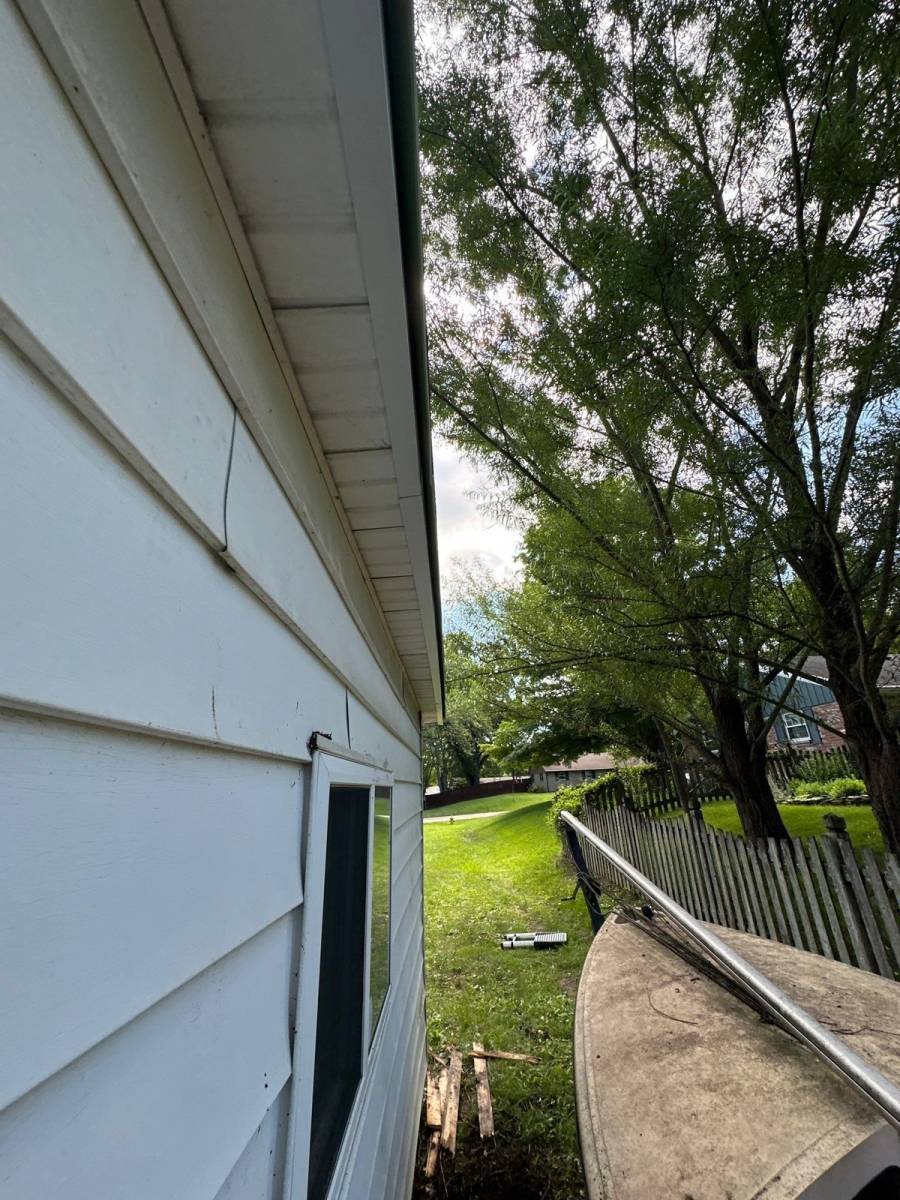
What is the difference between soffit and fascia?
Fascia is the vertical band running along the roof line. It's what your gutters are attached to.
Soffit is the underside panel that closes off the space beneath the roof overhang.
They're easy to overlook. They also do real work, and when they fail the damage tends to spread rather than stay put.
Signs of deterioration
- Peeling paint or visible rot on the fascia
- Soffit panels staining, sagging, or pulling away
- Gutters loose or pulling off the edge
- Pests or birds getting into the overhang
Because these components sit right at the roof edge, problems there are frequently the visible end of a water issue that started above.
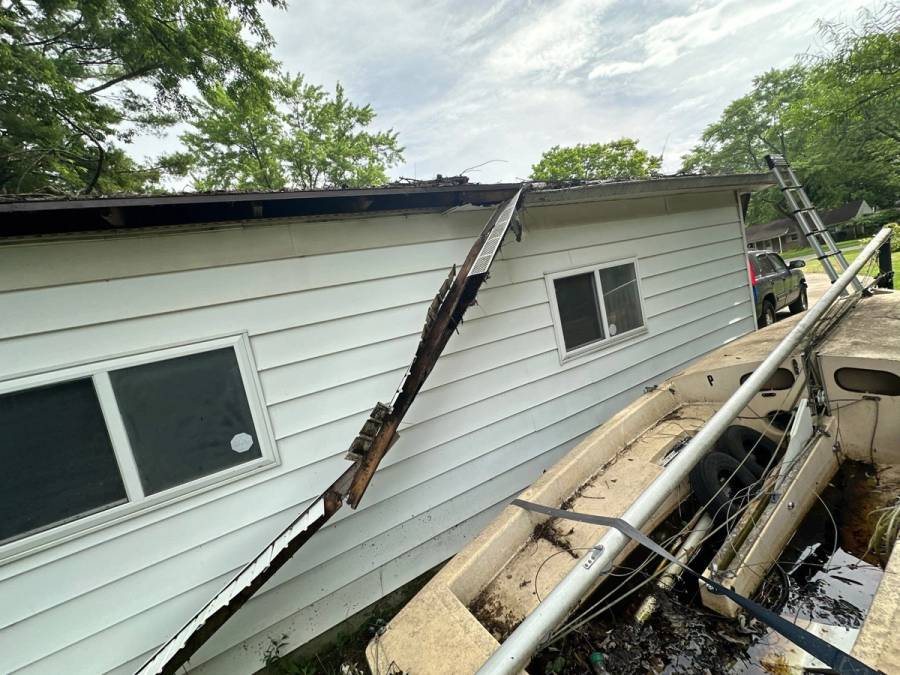
Why the condition matters more than it looks
Fascia gives the gutter something solid to attach to. If it's rotted, the gutters can't be secured properly, no matter how good the gutters are.
Soffit closes off the overhang and often ventilates it. When it fails, water and pests get access to the roof structure, and the ventilation balance your attic depends on can be disrupted. That balance is worth understanding on its own, because intake at the soffit is the part most often restricted.
The roof edge is a system
Shingles shed water past the edge. Gutter apron at the eaves and drip edge at the rakes direct that water off the roof and into the gutter rather than back behind it. The gutter carries it away. The soffit ventilates the overhang.
Those two pieces of metal are easy to mix up. Gutter apron vs drip edge explains what each one does.
If one part is compromised, a rotted fascia, a blocked soffit vent, a failing gutter, the others tend to suffer with it. That's why these are best evaluated together with the roof edge rather than one at a time.
When replacement makes sense
Once fascia or soffit has rotted or taken on water, replacement is the fix that lasts. We do not patch fascia or soffit. We replace it in full, the same rule we follow on roofs and siding.
Painting over rot doesn't stop it. It hides it until the next time somebody looks.
Custom bent aluminum trim
Where the wood underneath has rotted, we replace it with new wood and then wrap it. Where it's still sound, it stays as the substrate and gets wrapped over. Either way the finished edge is the same.
The trim itself is formed on site with a brake, bent to fit the specific edge of that home rather than cut from stock lengths and made to work.
Aluminum doesn't rot the way exposed wood does, and it doesn't need repainting every few years. It gives the roof edge a clean, low maintenance finish built to hold up, not just to look finished on the day the crew leaves.
Fascia, soffit and custom trim are covered by our Lifetime Workmanship Warranty when installed as full systems.