
What gutter guards actually do
The job is to block leaves, twigs and larger debris so water keeps flowing to the downspout instead of overflowing the gutter.
On a property with tree cover, that can be the difference between cleaning gutters several times a year and effectively not thinking about them. It matters just as much when the trees belong to a neighbor, because the debris doesn't respect a property line.
Are gutter guards worth it?
On most homes, yes. Guards keep leaves and debris from filling the gutters, freezing in winter and pulling the gutters off the fascia. That adds years to the gutter system.
Guards earn their keep on homes with significant tree cover, on steep or hard to access roofs where cleaning is difficult or genuinely unsafe, and anywhere overflowing gutters have already caused problems at the fascia, the soffit, or the foundation.
Not every guard is the same product
This is where most of the confusion comes from. Gutter guard covers everything from a plastic screen that clips on to a stainless steel mesh that becomes part of the roof edge, and they don't perform remotely alike.
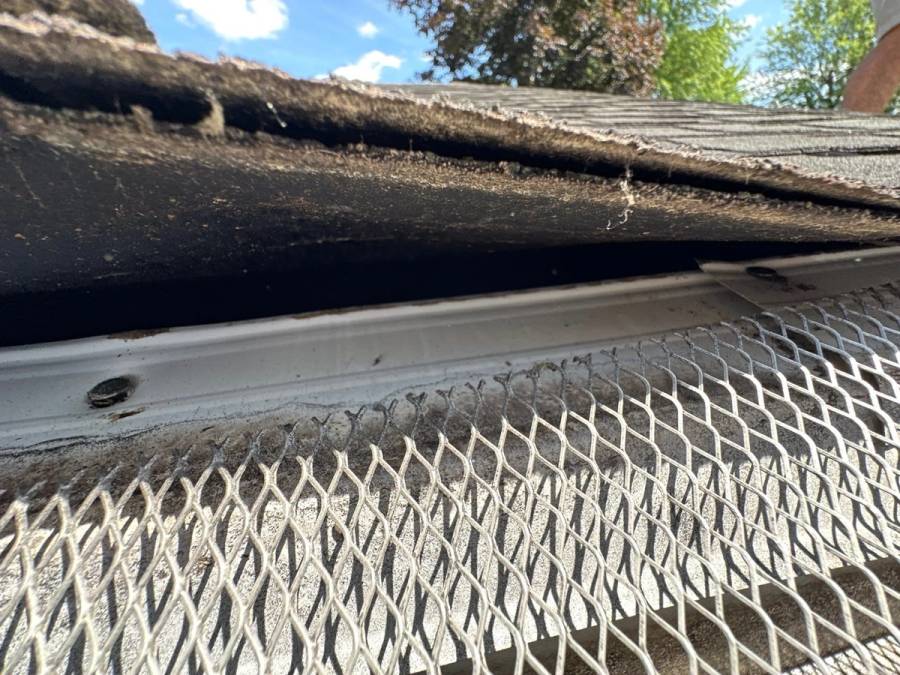
What we install is a high grade industrial stainless steel mesh with a lifetime warranty on material and workmanship. The back edge slides under the first row of shingles and the front fastens to the front of the gutter. Nothing is fastened to the roof, so the guards will not void a roof warranty.
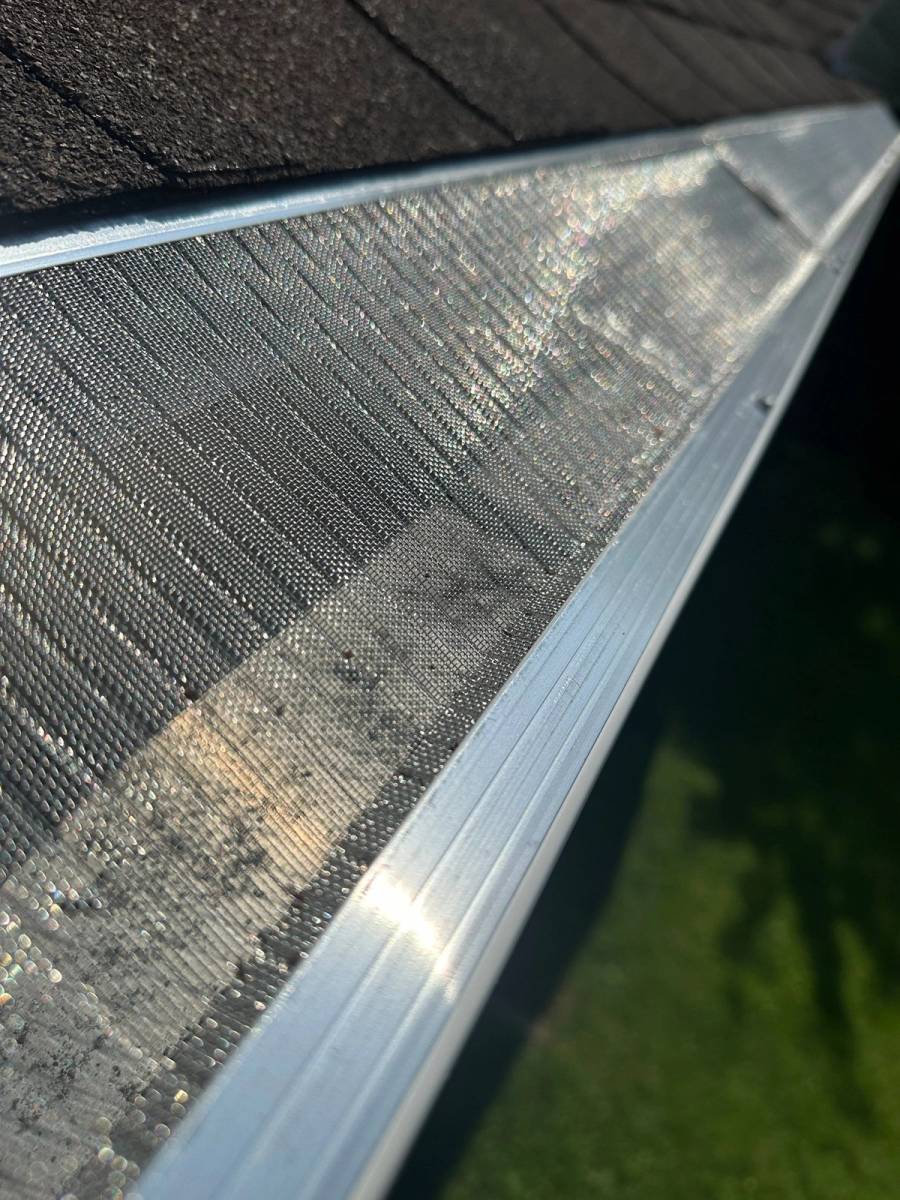
Mounting it that way sets the mesh on a natural incline rather than flat. The incline helps debris shed rather than sit flat on the screen.
Do you still have to clean your gutters? No. We've been installing this product for eight years and have never had a callback about a clogged guard.
When a guard fails, this is what it looks like
The photographs on this page are from inspections. They're guards that were already on the house when we got there, and they show what a guard that traps debris rather than shedding it actually does.
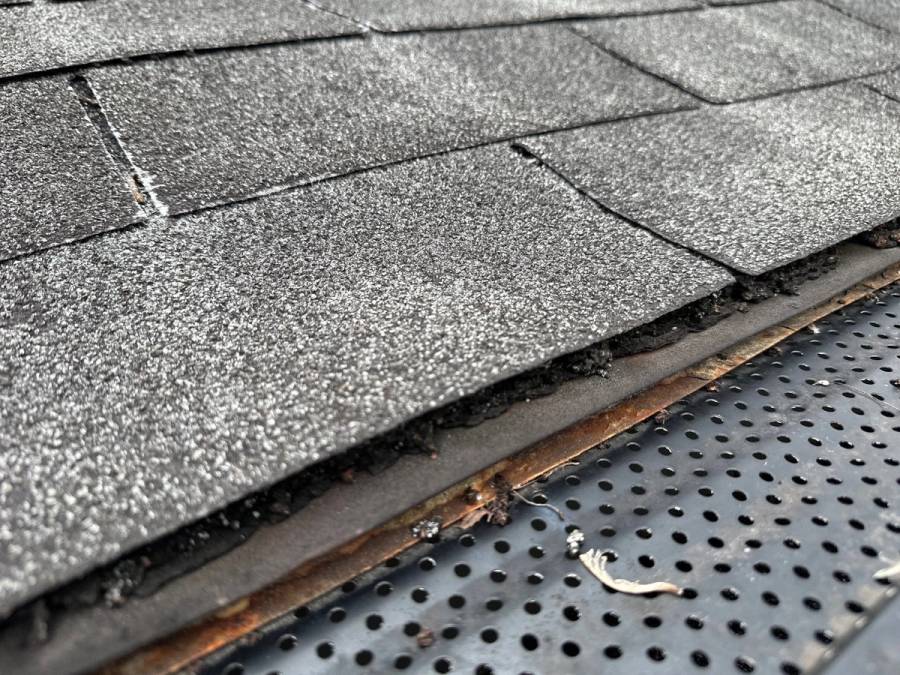
The trough behind it fills with dirt, rotted leaf matter and shingle granules. From the ground everything looks fine. That's the part worth understanding about a cheap guard: it doesn't announce that it has stopped working.
What we tell our own customers
If you ever have a problem with a guard we installed, you call us. You do not get a ladder out and you do not get on the roof.
We send someone out. In eight years we haven't had to.
Nobody should be on a ladder at gutter height because of a product we sold them.
The gutters underneath matter as much as the guard
Guards work best on gutters that are in good condition and correctly sized for the roof.
They don't have to be new gutters. Can gutter guards be installed on existing gutters? covers what the gutters need first.
Five inch and six inch seamless are both common around here. Six inch systems move noticeably more water and are often the better choice on a larger roof, or on a steep pitch that sheds water fast.
A guard can't correct an undersized gutter, a slope that doesn't drain, or downspouts that can't handle the volume. If the underlying system has those problems, the guard won't solve them, and putting one on first is money in the wrong order.
Whether a guard is right for your home depends as much on what's under it as what goes over it. That's what we look at first.